Introduction
Have you ever checked your credit card statement and wondered:
“Why was I charged ₹590 when I didn’t buy anything?”
You’re not alone.
Many people apply for a credit card because of exciting offers like cashback, reward points, airport lounge access, or no-cost EMI. But after a few months, they notice unexpected charges on their monthly statement.
The truth is that banks clearly mention these charges in the Terms & Conditions, but most people never read the fine print.
As a result, thousands of cardholders lose money every year through hidden fees that could have been avoided.
In this guide, you’ll learn about 15 hidden credit card charges banks don’t openly highlight, how they work, and simple ways to avoid paying them.
Whether you’re a first-time cardholder or have been using credit cards for years, this guide can help you save thousands of rupees every year.
Why You Should Read This Guide
By the end of this article, you’ll know:
✅ Which fees are unavoidable
✅ Which charges can be avoided completely
✅ How banks calculate interest
✅ Common mistakes that trigger penalties
✅ Tips to reduce unnecessary credit card costs
Table of Contents
The Problem
Many people believe a credit card is “free money until the due date.”
Unfortunately, that’s only partly true.
Here’s what usually happens:
- You miss a payment by one day.
- You withdraw cash from an ATM.
- You spend abroad.
- You convert purchases into EMI.
- You don’t use the card enough to waive the annual fee.
Suddenly, your ₹5,000 purchase becomes ₹6,200 or even more after different fees, taxes, and interest are added.
Even worse, several charges are applied automatically without any warning.
Common Reasons Cardholders Lose Money
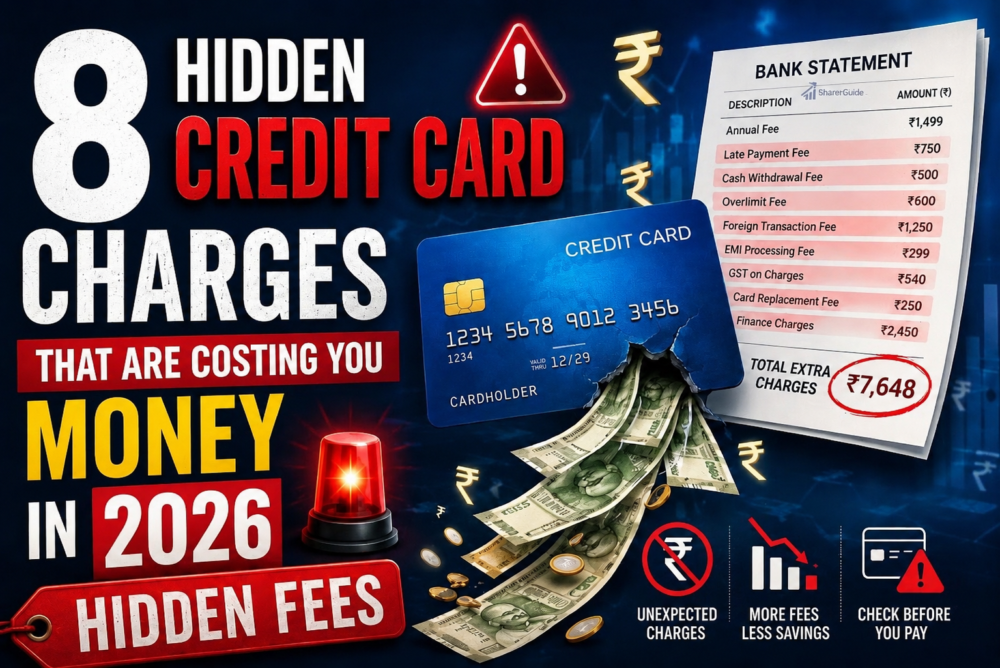
| Mistake | Result |
|---|---|
| Missing payment due date | Late payment fee + GST + Interest |
| Paying only Minimum Due | Heavy finance charges |
| Cash withdrawal | Immediate interest starts |
| International spending | Foreign currency markup |
| Not reading card terms | Surprise annual fees |
| EMI conversion | Processing charges + GST |
Average Hidden Charges You May Pay in One Year
| Charge | Estimated Cost |
|---|---|
| Annual Fee | ₹500–₹5,000 |
| Late Payment Charges | ₹500–₹1,300 |
| GST on Charges | 18% Extra |
| Finance Charges | ₹2,000+ |
| Foreign Transaction Fee | 2%–4% |
| Cash Withdrawal Charges | ₹500–₹1,000 |
| Overlimit Charges | ₹500–₹1,000 |
Total possible hidden cost: ₹5,000–₹20,000 per year
Hidden Charge 1 – Annual Fee
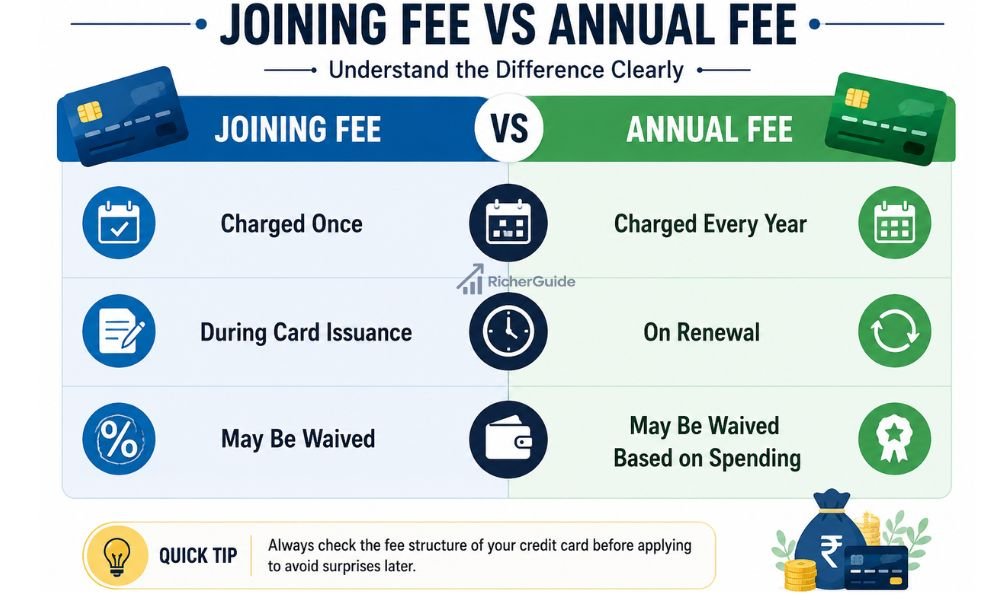
Many people confuse Joining Fee with Annual Fee.
A joining fee is charged only once when you receive the card.
An annual fee is charged every year to continue using the card.
Some premium cards charge annual fees of ₹10,000 or more.
Example
Rahul gets a credit card with:
- Joining Fee: ₹999
- Annual Fee: ₹999
He thinks he paid everything already.
One year later, another ₹999 is automatically added to his statement.
How to Avoid
- Choose Lifetime Free cards.
- Spend enough to qualify for fee waiver.
- Check annual fee before applying.
Hidden Charge 2 – Finance Charges (Interest Charges)
This is the most expensive credit card charge.
Many banks charge 3–4% interest every month, which can become 40–48% annually.
If you don’t pay the full outstanding amount before the due date, interest starts accumulating.
Example
Outstanding Amount = ₹50,000
Interest = 3.75% Monthly
Monthly Interest = ₹1,875
Yearly Cost = More than ₹22,000
How to Avoid
✔ Always pay Full Amount Due.
✔ Avoid carrying balances.
✔ Set AutoPay.
Quick Fact
Paying only the Minimum Amount Due does NOT stop interest.
Hidden Charge 3 – Late Payment Fee
Missing your payment due date can result in:
- Late payment fee
- GST
- Interest charges
- Credit score impact
Depending on the bank, late payment fees may range from ₹100 to over ₹1,300.
Example
Outstanding = ₹9,000
Late Fee = ₹750
GST = ₹135
Interest = ₹300+
Total Additional Cost = ₹1,185
Tips to Avoid
- Enable Auto Debit.
- Set reminders.
- Pay 2–3 days before the due date.
Hidden Charge 4 – Cash Withdrawal Charges
Many people think a credit card works like an ATM card.
It doesn’t.
The moment you withdraw cash:
- Cash withdrawal fee applies.
- Interest starts immediately.
- No interest-free period.
Typical fee:
2.5% to 3% of amount
Minimum ₹500.
Example
Cash Withdrawn = ₹10,000
Cash Advance Fee = ₹500
Interest = Starts from Day One
GST = Extra
Total Cost may exceed ₹900 within a month.
Best Practice
Only withdraw cash during emergencies.
Hidden Charge 5 – Foreign Transaction Fee
Shopping on international websites?
Using your card abroad?
Banks generally charge 2%–4% as a currency markup.
This includes:
- Amazon US
- Netflix International
- Apple Store
- Google Play
- International hotels
- Overseas travel
Example
International Purchase = ₹50,000
Forex Markup = 3.5%
Charge = ₹1,750
GST = ₹315
Total Extra = ₹2,065
Save Money
Use:
- Zero Forex Credit Cards
- Travel Cards
- Multi-currency Cards
Hidden Charge 6 – Overlimit Fee
Every credit card has a spending limit.
Suppose your limit is:
₹1,00,000
You spend:
₹1,05,000
Some banks allow the transaction but charge an Overlimit Fee.
Typical charge:
₹500–₹1,000 + GST
How to Avoid
Keep your credit utilization below 30%.
Monitor spending through mobile banking apps.
Hidden Charge 7 – EMI Conversion Charges
“No Cost EMI” doesn’t always mean completely free.
Possible charges include:
- Processing fee
- GST
- Foregone cashback
- Higher product price
Example
TV Price = ₹60,000
EMI Processing Fee = ₹299
GST = ₹54
Total = ₹353 Extra
Some merchants also remove instant discounts if EMI is selected.
Before Choosing EMI
Always check:
- Processing Fee
- Effective Interest Rate
- Discount Eligibility
Hidden Charge 8 – Card Replacement Fee
Lost your card?
Damaged card?
Need urgent replacement?
Many banks charge replacement fees.
Typical range:
₹100–₹500
Premium cards may charge even more.
Example
Lost Card Replacement
Replacement Fee = ₹250
GST = ₹45
Total = ₹295
Prevention Tips
- Freeze card instantly using mobile app.
- Store virtual card details securely.
- Protect your physical card from damage.
Quick Comparison Table
| Hidden Charge | Typical Cost | Can You Avoid It? |
|---|---|---|
| Annual Fee | ₹500–₹5,000 | ✅ Yes |
| Finance Charges | Up to 48% yearly | ✅ Yes |
| Late Payment Fee | ₹100–₹1,300 | ✅ Yes |
| Cash Withdrawal Fee | 2.5–3% | ✅ Yes |
| Foreign Transaction Fee | 2–4% | ✅ Yes |
| Overlimit Fee | ₹500–₹1,000 | ✅ Yes |
| EMI Processing Fee | ₹199–₹999 | ✅ Yes |
| Card Replacement Fee | ₹100–₹500 | Mostly |
Conclusion: Small Hidden Charges Can Cost You Big
A credit card is one of the most useful financial tools when used responsibly. It offers convenience, rewards, cashback, airport lounge access, and even helps build a strong credit score. However, if you ignore the terms and conditions or miss payments, those same benefits can quickly turn into unnecessary expenses.
The good news is that most hidden credit card charges are completely avoidable. By paying your bills on time, clearing the full outstanding amount, avoiding cash withdrawals, monitoring your spending, and choosing the right credit card for your lifestyle, you can save thousands of rupees every year.
Before applying for any credit card, take a few minutes to read the fee structure, interest rates, and eligibility for fee waivers. A little awareness today can prevent expensive surprises tomorrow.
Remember, the best credit card isn’t the one with the most offers. it’s the one you can manage wisely.
If you found this guide helpful, share it with your friends and family so they can avoid hidden charges too. Also, explore our other credit card guides on RicherGuide.com to make smarter financial decisions and maximize your card benefits.
Final Thoughts
Credit cards are neither good nor bad they are simply financial tools. The difference lies in how you use them.
Banks disclose every charge in the card’s terms and conditions, but many users skip reading the fine print. Spending just a few minutes understanding your credit card can save you thousands of rupees in unnecessary fees each year.
Stay informed, spend responsibly, pay your dues on time, and always compare credit cards before applying. Financial awareness is the first step toward financial freedom.
Smart spending today leads to better savings tomorrow.
Disclaimer
The information provided in this article is for educational and informational purposes only and should not be considered financial, legal, tax, or investment advice. Credit card fees, interest rates, annual charges, foreign transaction fees, reward programs, and other terms may vary depending on the issuing bank, card type, and applicable regulations.
While every effort has been made to ensure the accuracy of the information, banks may revise their fee structures, policies, and offers without prior notice. Readers are advised to verify the latest charges, terms and conditions, and eligibility criteria directly with the respective bank or credit card issuer before making any financial decision.
RicherGuide.com and the author are not responsible for any financial losses or decisions made based on the information provided in this article. Always read the official card agreement and consult a qualified financial advisor if you require personalized guidance.