Introduction
Credit Card Fraud can happen faster than you think. One careless click, one fake phone call, or one shared OTP can turn a normal day into a stressful financial situation.
🚨 But what happens after you discover that someone has used your credit card without your permission?
In Part 1, we explained what credit card fraud is, how scammers target victims, and how they steal sensitive card information. ATM skimming, phishing emails, fake SMS messages, fake bank calls, fraudulent shopping websites, SIM swap scams, malware, contactless theft, and data breaches.
👉 Missed the earlier parts?
📌 Read Part 1:
Credit Card Fraud Explained – Part 1
Now comes the most important part: what should you do if you become a victim?
In Part 2, we focus on the actions you should take immediately after discovering an unauthorized transaction. You will learn how to block your card, contact your bank, report the fraud, understand the basic RBI framework for unauthorized electronic transactions, secure your accounts, report cyber fraud, monitor your credit card, and reduce the risk of further losses.
We will also cover official reporting channels, frequently asked questions, practical safety checklists, and important lessons every credit card user should remember.
💡 Remember: When fraud happens, every minute matters. The faster you report it, the sooner you can start protecting your money and accounts.
Let’s learn exactly what to do when your credit card security is compromised.
Table of Contents
What to Do If You Become a Victim of Credit Card Fraud
The first few minutes after discovering fraud are extremely important. Acting quickly can reduce your financial loss and improve your chances of recovering the money.
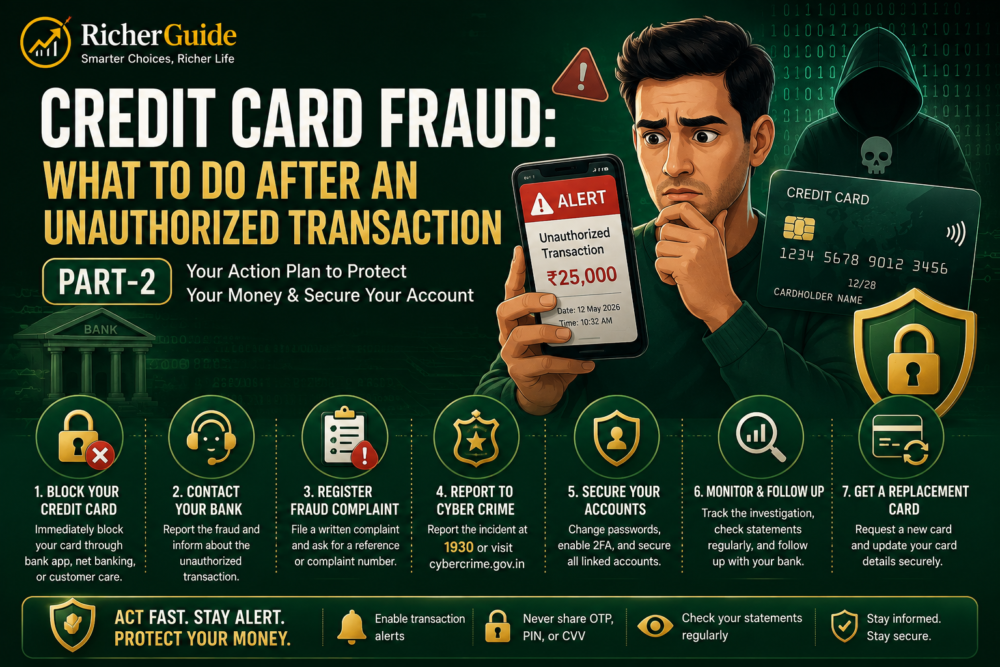
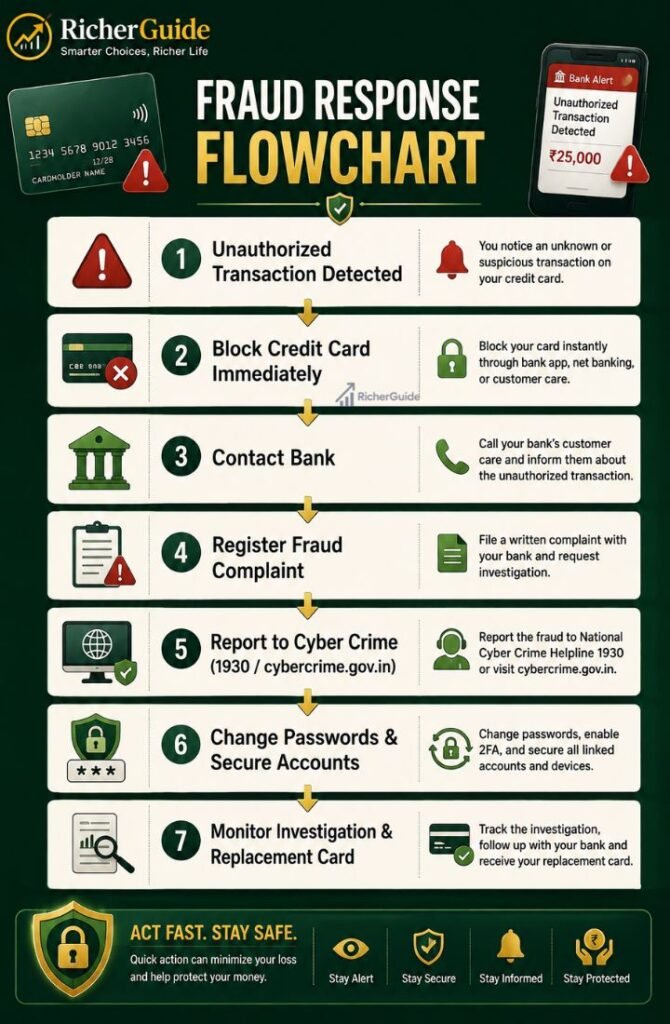
Step 1 – Block Your Credit Card Immediately
If you notice an unauthorized transaction:
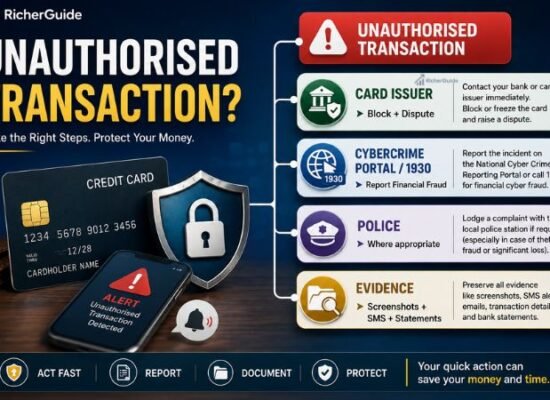
- Block the card using your bank’s mobile app.
- Use Internet Banking to temporarily freeze the card (if available).
- Call your bank’s official customer care number.
- Request permanent blocking if necessary.
Tip: Save your bank’s official customer care number in your phone before an emergency occurs.
Step 2 – Check Your Recent Transactions
Review:
- SMS transaction alerts
- Email notifications
- Mobile banking app
- Credit card statement
Identify:
- Unauthorized purchases
- International transactions
- Contactless payments
- Recurring subscriptions you don’t recognize
Take screenshots or download statements for your records.
Step 3 – Report the Fraud to Your Bank
Contact your bank immediately and provide:
- Card number (only the last 4 digits if asked over a secure channel)
- Date and time of suspicious transactions
- Transaction amount
- Merchant name (if available)
- Location (if known)
Request:
- Card blocking
- Chargeback or dispute process
- Fraud investigation
- Replacement card
Record the complaint or reference number.
RBI’s Limited Liability Framework (Unauthorized Electronic Transactions)
The Reserve Bank of India (RBI) provides protections for customers reporting unauthorized electronic transactions.
In general:
| Situation | Customer Liability |
|---|---|
| Fraud due to bank negligence | Zero liability for the customer |
| Third-party breach reported promptly | Limited or zero liability, subject to RBI guidelines and bank policy |
| Customer shares OTP, PIN, CVV, or passwords | Customer may be responsible for the loss |
Important: Report unauthorized transactions as soon as you notice them. Delays can reduce your protection under applicable rules.
Step 4 – Change Your Passwords
Immediately change:
- Net Banking password
- Mobile banking password
- Email password
- UPI PIN (if relevant)
- Shopping website passwords where the card is saved
Enable Two-Factor Authentication (2FA) wherever possible.
Step 5 – Scan Your Device
If you suspect malware:
- Run a trusted antivirus scan.
- Remove suspicious apps.
- Update your operating system.
- Install the latest security updates.
- Reset your device if necessary after backing up important data.
Step 6 – Report to the National Cyber Crime Portal
If you have been cheated online, report it immediately.
You can report:
- Credit card fraud
- Phishing
- Fake shopping websites
- SIM swap fraud
- Online banking fraud
- OTP scams
Official Portal:
Cyber Crime Helpline
1930
The sooner you report, the greater the chance of stopping or tracing fraudulent transactions.
Step 7 – Monitor Your Credit Card
For the next few months:
- Review statements regularly.
- Enable instant alerts.
- Check for unknown subscriptions.
- Watch for small “test” transactions, as scammers sometimes make low-value charges before attempting larger fraud.
Official Reporting Channels
| Organization | Purpose |
|---|---|
| Your Card-Issuing Bank | Block card, dispute transactions, request replacement |
| RBI Integrated Ombudsman | Escalate unresolved complaints after following the bank’s grievance process |
| National Cyber Crime Portal | Report online financial fraud |
| Cyber Crime Helpline 1930 | Immediate reporting of online financial fraud |
| Visa / Mastercard / RuPay | Support through the issuing bank for card-related disputes |
Bank Emergency Checklist
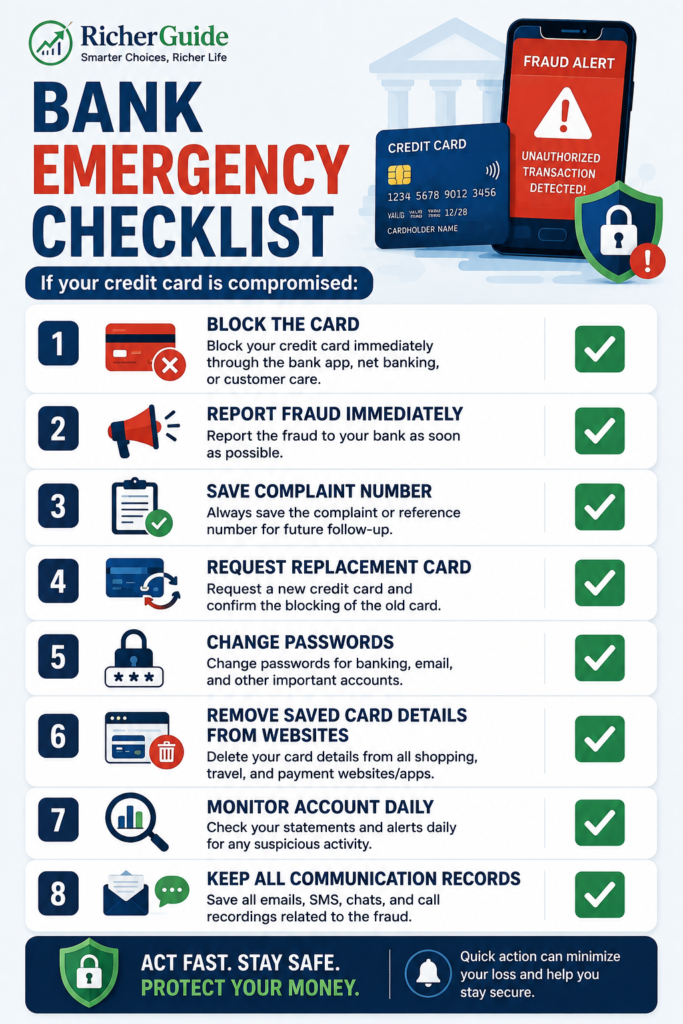
If your credit card is compromised:
☑ Block the card
☑ Report fraud immediately
☑ Save complaint number
☑ Request replacement card
☑ Change passwords
☑ Remove saved card details from websites
☑ Monitor account daily
☑ Keep all communication records
Credit Card Fraud Prevention Checklist
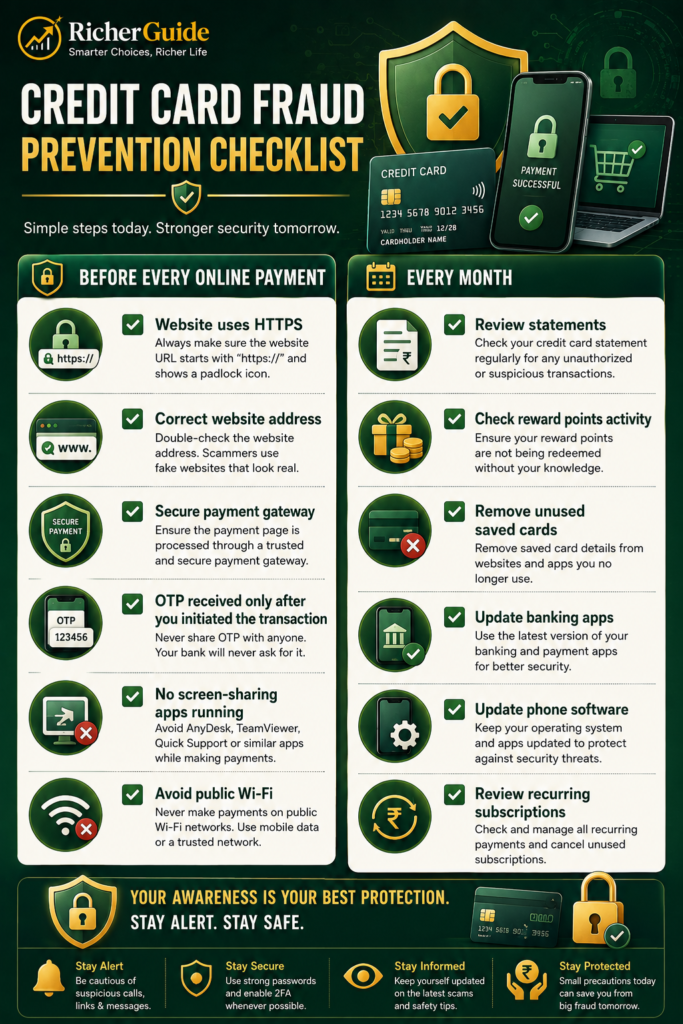
Before Every Online Payment
✔ Website uses HTTPS
✔ Correct website address
✔ Secure payment gateway
✔ OTP received only after you initiated the transaction
✔ No screen-sharing apps running
✔ Avoid public Wi-Fi
Every Month
✔ Review statements
✔ Check reward points activity
✔ Remove unused saved cards
✔ Update banking apps
✔ Update phone software
✔ Review recurring subscriptions
Real-Life Example
Case Study
Priya received an SMS claiming she had earned ₹5,000 in reward points.
The message included a link to “redeem” the reward.
She entered:
- Card Number
- Expiry Date
- CVV
- OTP
Within minutes:
- ₹18,000 spent on an online shopping website
- ₹25,000 spent on gift cards
She immediately:
- Blocked her card
- Contacted her bank
- Reported the fraud on the National Cyber Crime Portal
- Called 1930
Because she acted quickly, some pending transactions were stopped before completion.
Lesson: Banks never ask you to redeem reward points by entering your full card details and OTP on unknown websites.
Credit Card Security Scorecard
| Security Habit | Excellent | Good | Needs Improvement |
|---|---|---|---|
| SMS Alerts Enabled | ✅ | ||
| Banking App Updated | ✅ | ||
| Never Share OTP | ✅ | ||
| Statement Review | ✅ | ||
| Strong Password | ✅ | ||
| Public Wi-Fi Avoided | ✅ | ||
| Contactless Limit Managed | ✅ |
Aim for an “Excellent” rating across all habits.
Frequently Asked Questions (FAQs)
1. Can someone use my credit card without an OTP?
Yes. Some international merchants, recurring subscriptions, or card-not-present transactions may not require an OTP, depending on the merchant and payment network.
2. Can a scammer steal money using only my credit card number?
In some cases, yes. If they also obtain your expiry date, CVV, or exploit a merchant that does not require additional authentication, they may attempt unauthorized transactions.
3. Will the bank refund fraudulent transactions?
Banks investigate each case individually. Refunds depend on factors such as how the fraud occurred, whether you reported it promptly, and the applicable RBI guidelines and the bank’s policies.
4. How quickly should I report credit card fraud?
Immediately. Reporting as soon as you notice suspicious activity gives you the best chance of limiting losses and protecting your rights.
5. Can I recover my money?
Many customers recover some or all of their money if the fraud is reported quickly and they have not shared confidential information such as OTPs or PINs. The outcome depends on the investigation.
6. Is it safe to save my credit card on shopping websites?
Only save your card on trusted platforms if you understand the risks. For added security, consider not storing card details and use tokenized payments where available.
7. How do I know if my card has been cloned?
Possible signs include:
- Transactions in places you’ve never visited
- ATM withdrawals you didn’t make
- Purchases made while your physical card is still with you
8. What should I never share?
Never share:
- OTP
- PIN
- CVV
- Full card number
- Net banking password
- Mobile banking login credentials
9. Are contactless cards safe?
Yes, when used responsibly. Keep transaction alerts enabled, report lost cards immediately, and manage contactless settings through your bank if available.
10. What is the safest way to use a credit card online?
- Shop only on trusted websites
- Check for HTTPS
- Avoid public Wi-Fi
- Enable transaction alerts
- Review statements regularly
- Never share OTPs or PINs
Final Takeaway
Credit cards are one of the safest payment methods when used responsibly. Modern security features such as EMV chips, OTP verification, tokenization, and real-time alerts provide strong protection. However, scammers continue to exploit human error through phishing, fake calls, fraudulent websites, and social engineering.
The most effective defense is awareness. Never share your OTP, CVV, PIN, or passwords. Verify every communication claiming to be from your bank, monitor your statements regularly, and report suspicious activity immediately.
A few minutes of caution today can save you from significant financial loss tomorrow.
Conclusion
Credit card fraud is a growing challenge in India’s digital economy, but it is also largely preventable. By understanding common scam techniques, recognizing warning signs, following safe online practices, and acting quickly if fraud occurs, you can greatly reduce your risk.
Make security a habit, educate your family members, and stay informed about new fraud trends. Responsible credit card usage not only protects your money but also gives you the confidence to enjoy the convenience of digital payments safely.
Disclaimer
The information provided in “Credit Card Fraud Explained – Part 2” is for educational and informational purposes only. This article is intended to help readers understand common credit card fraud methods, recognize scam warning signs, and follow basic safety practices.
While RicherGuide makes reasonable efforts to provide accurate and updated information, banking policies, RBI guidelines, cybersecurity practices, card-network rules, and fraud-reporting procedures may change over time. Readers should always verify the latest information with their card-issuing bank, RBI, National Cyber Crime Reporting Portal, or other official authorities.
This article does not constitute financial, legal, banking, or cybersecurity advice. RicherGuide does not guarantee that the precautions mentioned will completely prevent fraud or financial loss.
If you notice an unauthorized transaction or believe your card information has been compromised, contact your bank immediately and use official reporting channels. Never share your OTP, PIN, CVV, passwords, or other confidential banking information with anyone claiming to represent your bank.
Remember: Always verify financial and security information through official sources before taking action.