Introduction
Credit cards have become one of the most popular financial tools in India. With the growth of digital payments, online shopping, travel bookings, UPI integration, and cashback offers, credit cards are no longer just for high-income individuals.
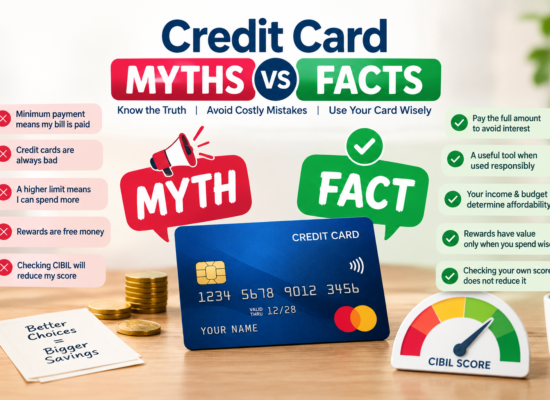
However, many beginners are confused about how credit cards work. Some people think credit cards create debt, while others use them incorrectly and end up paying high interest charges.
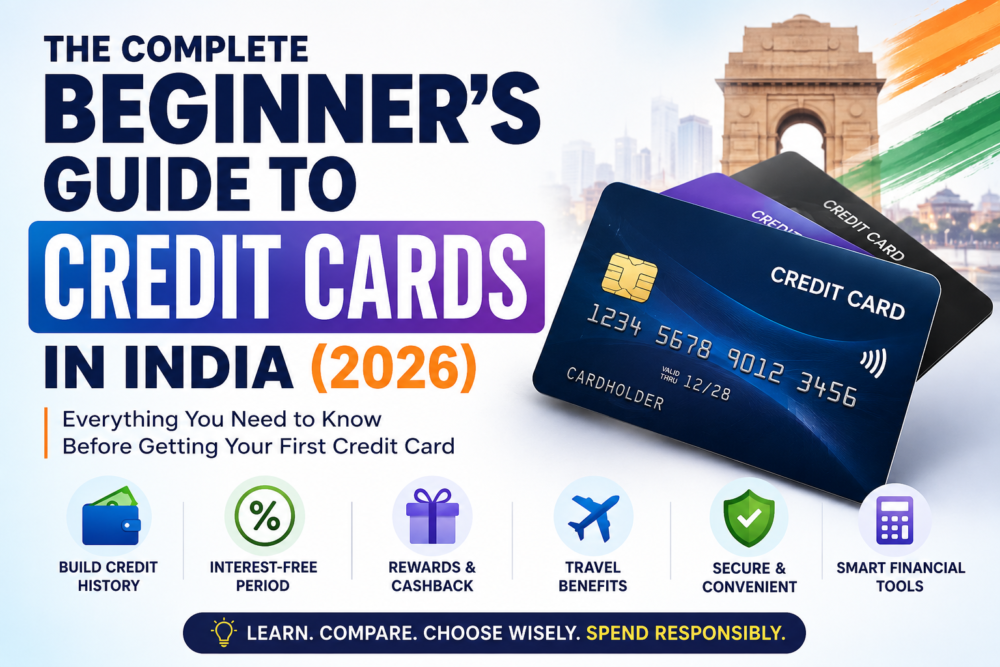
This Credit Card Guide for beginners will explain everything you need to know about Credit Cards in India in 2026, including how they work, billing cycles, rewards, interest rates, charges, benefits, and how to choose your first card.
Table of Contents
The Problem: Why Most Beginners Struggle with Credit Cards
Many first-time users face common problems:
❌ They don’t understand billing cycles.
❌ They miss payment due dates.
❌ They spend beyond their repayment capacity.
❌ They don’t know how interest is charged.
❌ They apply for the wrong card.
❌ They fail to use rewards and cashback benefits effectively.
As a result, credit cards get a bad reputation.
The truth is simple:
A credit card is one of the best financial tools when used responsibly and one of the most expensive loans when misused.
The Solution: Learn How Credit Cards Actually Work
Once you understand the basics, a credit card can help you:
- Build a strong credit score
- Earn cashback
- Get travel rewards
- Access emergency funds
- Enjoy interest-free periods
- Receive purchase protection
- Improve financial flexibility
Let’s start from the beginning.
What is a Credit Card?
A credit card is a payment instrument issued by a bank or financial institution that allows you to borrow money for purchases and repay it later.
Instead of paying immediately from your bank account, the card issuer pays the merchant first.
You then repay the amount according to the billing cycle.
Simple Example
Suppose:
- Credit Limit = ₹50,000
- You purchase a smartphone worth ₹20,000
The bank pays the merchant.
You now owe the bank ₹20,000.
If you repay the full amount before the due date, you usually pay zero interest.
Credit Card Working Diagram
You Buy Product
       ↓
Merchant Receives Payment
       ↓
Bank Pays Merchant
       ↓
Bank Sends Monthly Bill
       ↓
You Repay Bank
How Credit Cards Work
Every credit card follows the same basic process.
Step 1: Receive Credit Limit
The bank approves a maximum spending limit.
Example:
| Card Type | Credit Limit |
|---|---|
| Entry Level | ₹20,000–₹1 Lakh |
| Mid-Range | ₹1–5 Lakhs |
| Premium | ₹5–20 Lakhs+ |
Step 2: Make Purchases
You use the card for:
- Shopping
- Online payments
- Travel bookings
- Utility bills
- Dining
- Fuel
Step 3: Monthly Statement
The bank generates a statement containing:
- Total spent
- Minimum due
- Total due
- Payment due date
Step 4: Repayment
You can:
- Pay full amount
- Pay minimum amount
- Pay partial amount
Paying the full amount is always the best option.
Credit Limit Explained
A credit limit is the maximum amount you can borrow using your card.
Example
Credit Limit = ₹1,00,000
Current Spending:
| Transaction | Amount |
|---|---|
| Shopping | ₹20,000 |
| Flight Ticket | ₹15,000 |
| Dining | ₹5,000 |
| Total Used | ₹40,000 |
Available Credit:
₹1,00,000 – ₹40,000 = ₹60,000
What Determines Your Credit Limit?
Banks consider:
- Income
- Employment status
- Credit score
- Existing loans
- Repayment history
Billing Cycle and Due Date Explained
This is the most important concept for beginners.
Billing Cycle
A billing cycle is the period during which your transactions are recorded.
Typical cycle:
1st January – 31st January
Statement Generated:
1st February
Due Date:
20th February
Visual Timeline
Billing Cycle
1 Jan -------------------31 Jan

Statement Generated
          1 Feb

Payment Due
          20 Feb
Interest-Free Period
Most cards offer:
20–50 days interest-free.
Example
Purchase Date:
2 January
Due Date:
20 February
Interest-Free Period:
Approximately 49 days
This is one of the biggest advantages of credit cards.
Interest Rates and Charges
Many beginners ignore this section and later face problems.
Credit Card Interest Rate
Most Indian credit cards charge:
30%–48% annually
Equivalent:
2.5%–4% per month
Example
Outstanding Balance:
₹50,000
Monthly Interest:
3.5%
Interest Charged:
₹1,750
Repeated every month until repayment.
Common Credit Card Charges
| Charge Type | Typical Amount |
|---|---|
| Annual Fee | ₹0–₹10,000+ |
| Late Payment Fee | ₹100–₹1,500 |
| Cash Withdrawal Fee | 2%–3% |
| Foreign Transaction Fee | 2%–4% |
| EMI Processing Fee | Varies |
| GST | Applicable |
Benefits of Using a Credit Card
When used properly, credit cards offer significant advantages.
1. Builds Credit Score
A credit card helps establish credit history.
Good repayment habits improve your:
- Credit score
- Loan eligibility
- Home loan approval chances
2. Interest-Free Credit
You can use the bank’s money for several weeks without paying interest.
3. Cashback Rewards
Many cards offer:
- 1%–10% cashback
- Shopping rewards
- Dining rewards
Example
Monthly Spending:
₹20,000
Average Cashback:
5%
Annual Savings:
₹12,000
4. Reward Points
You earn points on spending.
Example:
100 points = Gift vouchers
1000 points = Flight discounts
5000 points = Product purchases
5. Travel Benefits
Premium cards may offer:
- Airport lounge access
- Travel insurance
- Hotel discounts
- Flight rewards
6. EMI Conversion
Large purchases can be converted into monthly installments.
Example:
Laptop Cost:
₹60,000
EMI:
₹5,000 per month for 12 months
7. Fraud Protection
Most cards offer:
- OTP security
- Zero liability protection
- Transaction alerts
Common Mistakes Beginners Make
Avoid these costly errors.
Mistake #1: Paying Only Minimum Due
Banks allow minimum payments.
Example:
Outstanding:
₹20,000
Minimum Due:
₹1,000
Remaining balance attracts interest.
This can lead to debt accumulation.
Mistake #2: Missing Due Dates
Late payments result in:
- Penalties
- Interest charges
- Lower credit score
Mistake #3: Cash Withdrawals
Credit cards should not be used for ATM cash withdrawals.
Reasons:
- Immediate interest
- Cash advance fees
Mistake #4: Maxing Out Credit Limit
Bad Example:
Credit Limit = ₹1 Lakh
Usage = ₹95,000
Credit utilization = 95%
This negatively affects credit score.
Mistake #5: Applying for Too Many Cards
Multiple applications may lower approval chances temporarily.
How to Choose Your First Credit Card
Choosing the right card is crucial.
Step 1: Identify Your Spending Pattern
Ask:
Where do I spend most?
- Online shopping
- Travel
- Dining
- Fuel
- General spending
Step 2: Compare Fees
| Feature | Ideal Beginner Choice |
|---|---|
| Joining Fee | Low or Zero |
| Annual Fee | Low or Zero |
| Reward Rate | Moderate |
| Interest Rate | Lower Preferred |
Step 3: Check Eligibility
Banks evaluate:
- Income
- Employment
- Credit profile
Step 4: Look for Useful Benefits
Useful:
✅ Cashback
✅ Reward points
✅ Lounge access
✅ Fuel surcharge waiver
Avoid paying high fees for benefits you won’t use.
Example: Choosing Between Two Cards
| Feature | Card A | Card B |
|---|---|---|
| Annual Fee | ₹0 | ₹999 |
| Cashback | 1% | 5% |
| Lounge Access | No | Yes |
| Rewards | Basic | Premium |
Best Choice?
If spending is low:
Card A
If spending is high:
Card B
Credit Card Utilization Ratio Explained
One key factor in credit scores.
Formula:
Credit Utilization =
Used Credit ÷ Total Credit Limit × 100
Example
Used:
₹20,000
Limit:
₹1,00,000
Utilization:
20%
Excellent.
Recommended Utilization
| Ratio | Impact |
|---|---|
| Below 30% | Excellent |
| 30–50% | Good |
| 50–75% | Risky |
| Above 75% | Negative |
Credit Card Rewards Calculator
Example Spending
| Category | Monthly Spend |
|---|---|
| Shopping | ₹10,000 |
| Fuel | ₹5,000 |
| Dining | ₹3,000 |
| Bills | ₹2,000 |
| Total | ₹20,000 |
2% Reward Rate
Monthly Rewards:
₹400
Annual Rewards:
₹4,800
5% Cashback Card
Monthly Cashback:
₹1,000
Annual Cashback:
₹12,000
Best Credit Card Categories in India (2026)
| Type | Best For |
|---|---|
| Cashback Cards | Everyday Spending |
| Shopping Cards | Online Purchases |
| Fuel Cards | Vehicle Owners |
| Travel Cards | Frequent Travelers |
| Premium Cards | High Spenders |
| Secured Cards | Beginners |
Affiliate Recommendation Section
Recommended Credit Cards for Beginners
1. Cashback Credit Card
Best For:
- Daily spending
- Online shopping
Benefits:
- Cashback rewards
- Low annual fees
2. Lifetime Free Credit Card
Best For:
- First-time users
Benefits:
- No annual fee
- Easy approval
3. Travel Rewards Card
Best For:
- Frequent travelers
Benefits:
- Lounge access
- Travel rewards
- Insurance benefits
Tip: Compare fees, rewards, eligibility, and spending habits before applying.
Frequently Asked Questions (FAQ)
Is a credit card free money?
No.
It is borrowed money that must be repaid.
What happens if I miss the due date?
You may face:
- Interest charges
- Late payment fees
- Lower credit score
Can students get credit cards?
Some banks offer student or secured credit cards.
How many credit cards should a beginner have?
One card is usually sufficient initially.
Is paying minimum due enough?
No.
Always try to pay the full statement balance.
What is a good credit score in India?
Generally:
- 750+ = Good
- 800+ = Excellent
Can I withdraw cash using a credit card?
Yes, but it is usually expensive and should be avoided.
Are credit card reward points worth it?
Yes, if you pay bills on time and avoid interest charges.
Conclusion
Credit cards can be powerful financial tools when used responsibly. They help build credit history, provide rewards, improve financial flexibility, and offer convenient access to short-term credit.
The key to success is understanding how billing cycles, due dates, interest rates, and credit limits work. Always pay your bill in full, keep utilization below 30%, and choose a card that matches your spending habits.
For beginners in India, a low-fee cashback or lifetime-free credit card is often the best starting point. Used wisely, a credit card can become an important part of your long-term financial journey.
Disclaimer
This article is for educational and informational purposes only and should not be considered financial, investment, tax, or legal advice. Credit card features, fees, interest rates, rewards, eligibility criteria, and regulations may change over time and vary between issuers. Always read the official terms and conditions provided by the card issuer before applying for any credit card. RicherGuide is not responsible for any financial decisions made based on the information provided in this article. Consult a qualified financial advisor if you require personalized financial guidance.