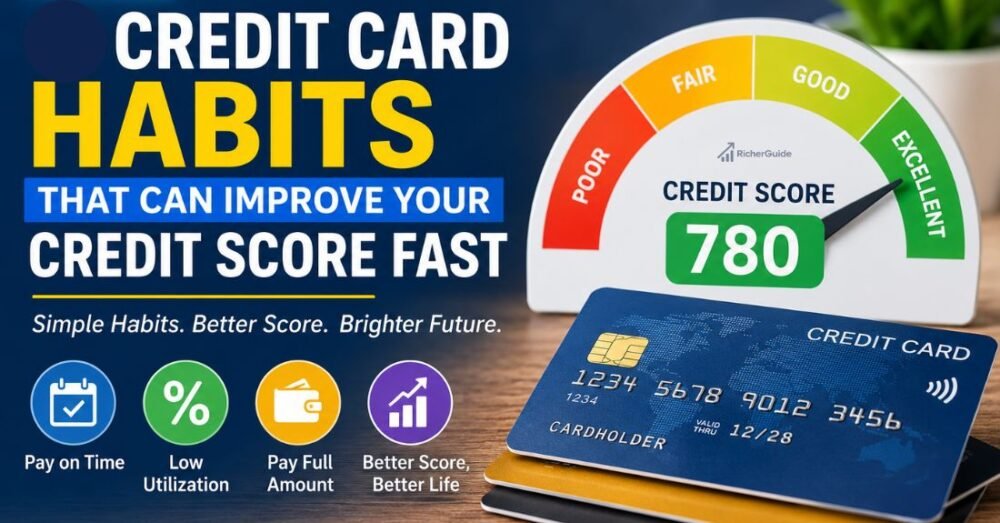
Your credit card can either build your financial future or quietly damage it. The difference lies in your daily habits.
Many people believe improving a credit score takes years. While building an excellent score does require consistency, adopting the right credit card habits can lead to noticeable improvements much sooner than you might expect.
Whether you’re planning to apply for a home loan, car loan, education loan, or another credit card, your credit score plays a major role. Banks and financial institutions use it to assess how responsibly you manage borrowed money.
The good news? You don’t need a higher salary or multiple credit cards to build a strong credit profile. Simple habits like paying your bill on time, keeping your credit utilization low, and avoiding unnecessary debt can significantly improve your creditworthiness.
In this guide, you’ll learn practical credit card habits that can help boost your credit score and improve your financial health.
Table of Contents
The Problem: Why Most People Have Poor Credit Scores
Many credit card users unknowingly make mistakes that lower their credit scores.
Common issues include:
- Missing payment due dates
- Paying only the minimum amount every month
- Using almost all of the available credit limit
- Applying for several credit cards within a short period
- Closing old credit cards without understanding the impact
- Ignoring credit reports and errors
These habits may seem harmless, but over time they can reduce your credit score and make it harder to qualify for loans or premium credit cards.
Why Your Credit Score Matters
A good credit score can help you:
| Benefit | Why It Matters |
|---|---|
| Faster Loan Approval | Banks trust borrowers with strong repayment history |
| Lower Interest Rates | Better credit often means cheaper loans |
| Higher Credit Limits | Issuers may increase your available credit |
| Premium Credit Cards | Easier access to cards with travel, cashback, and rewards |
| Better Negotiation Power | Lenders may offer better terms |
| Financial Security | Easier access to credit during emergencies |
What Is a Credit Score?
A credit score is a three-digit number that reflects your creditworthiness based on your borrowing and repayment behavior.
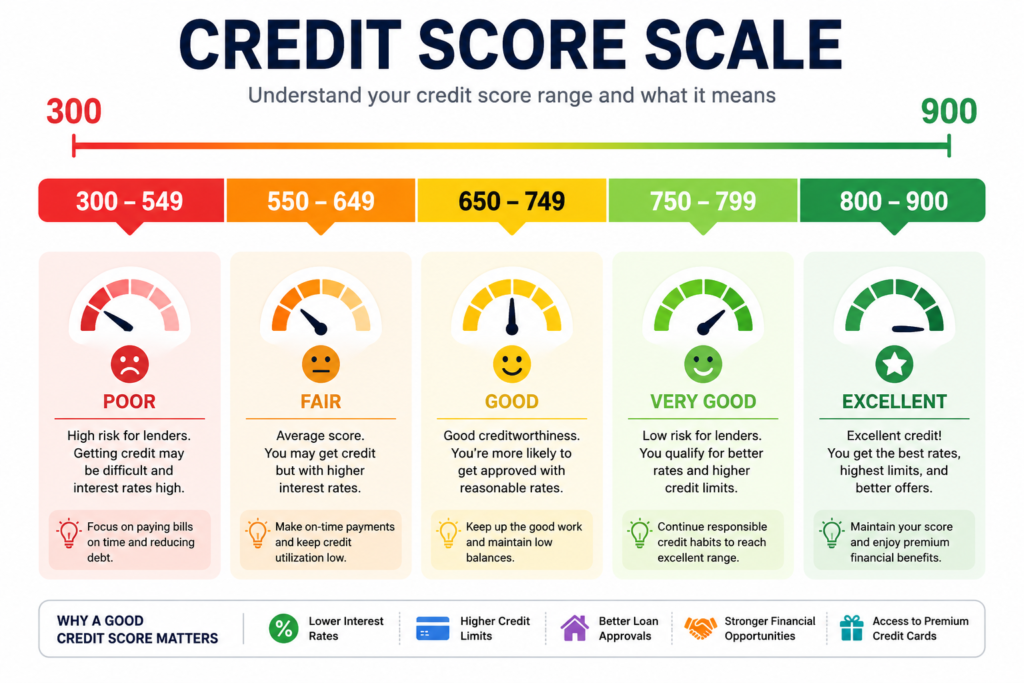
In India, scores typically range from 300 to 900. A higher score indicates responsible credit management.
General Credit Score Ranges
| Credit Score | Rating | Meaning |
|---|---|---|
| 300–549 | Poor | High lending risk |
| 550–649 | Fair | Needs improvement |
| 650–749 | Good | Acceptable for many lenders |
| 750–799 | Very Good | Strong credit profile |
| 800–900 | Excellent | Best borrowing opportunities |
Tip: A score above 750 is generally considered favorable for most loan and credit card applications in India.
How Credit Cards Affect Your Credit Score
Credit cards influence several key factors that make up your credit score.
| Factor | Approximate Impact | Can You Control It? |
|---|---|---|
| Payment History | High | Yes |
| Credit Utilization | High | Yes |
| Length of Credit History | Medium | Yes |
| Credit Mix | Medium | Partly |
| New Credit Inquiries | Medium | Yes |
The good news is that all these factors can be improved through disciplined credit card habits.
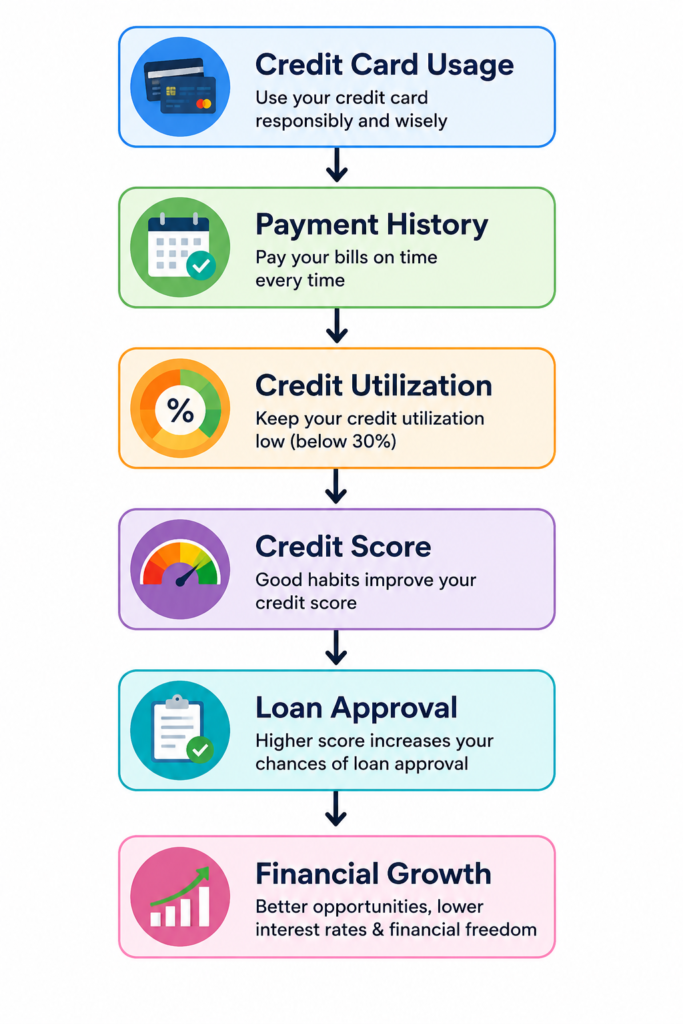
Habit 1: Always Pay Your Credit Card Bill on Time
Why It Matters
Payment history is one of the most influential factors affecting your credit score.
Even a single late payment can remain on your credit report for years and may negatively impact your score.
Consistently paying your full bill by the due date demonstrates financial responsibility.
Example
Rahul has a credit card with a monthly bill of ₹18,000.
- Pays on time every month → Credit profile remains strong.
- Misses one payment by 35 days → Credit score may decrease, and late fees plus interest are charged.
A simple reminder or automatic payment setup could have prevented this.
Best Practices
- Enable auto-debit for at least the minimum due (preferably the full amount).
- Set reminders a few days before the due date.
- Use calendar notifications.
- Check your statement as soon as it’s generated.
Common Mistakes
❌ Waiting until the last day to pay
❌ Ignoring SMS or email reminders
❌ Assuming weekends or holidays extend the due date
Quick Tip
Paying before the due date is always safer than paying on the due date.
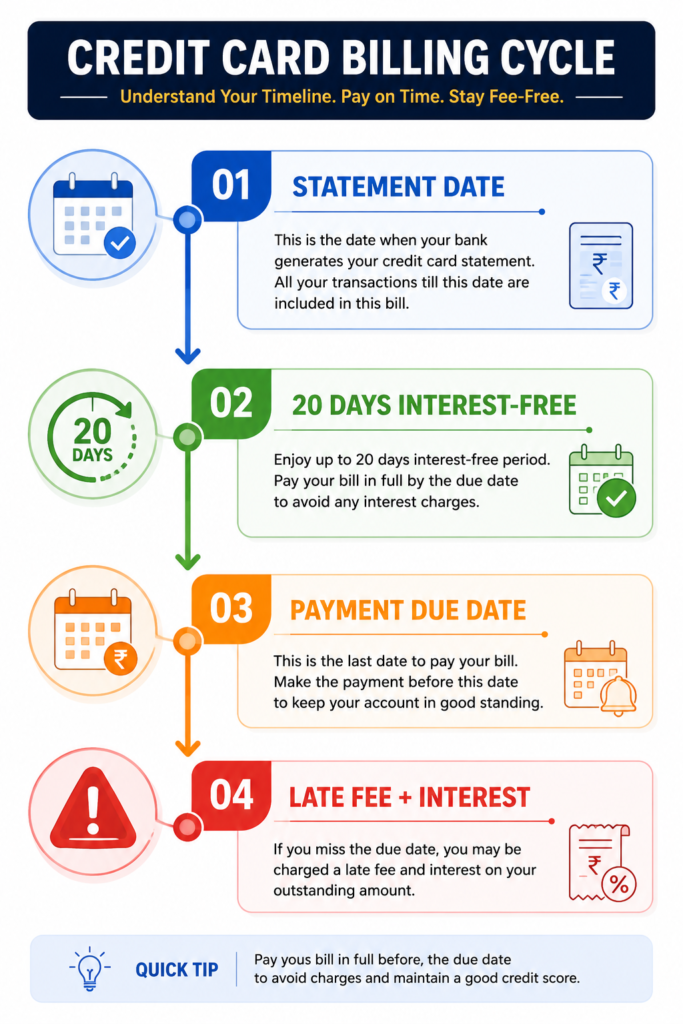
Habit 2: Keep Your Credit Utilization Below 30%
One of the easiest ways to improve your credit score is by maintaining a low credit utilization ratio.
What Is Credit Utilization?
It’s the percentage of your available credit limit that you’re currently using.
Formula
Credit Utilization (%) = (Outstanding Balance ÷ Total Credit Limit) × 100
Example
Credit Limit = ₹1,00,000
Outstanding Balance = ₹25,000
Utilization = 25%
This is generally considered healthy.
Another Example
Credit Limit = ₹50,000
Outstanding = ₹48,000
Utilization = 96%
Although you may pay the bill in full later, consistently high utilization can signal increased credit risk to lenders.
Recommended Utilization
| Utilization | Credit Score Impact |
|---|---|
| Under 10% | Excellent |
| 10–30% | Good |
| 30–50% | Average |
| Above 50% | Risky |
| Above 75% | Poor |
Suggested Bar Chart
Title: Credit Utilization vs Credit Score Health
Below 10%      ██████████ Excellent
10–30%         ████████   Good
30–50%         █████      Average
50–75%         ███        Risky
75%+           █          Poor
Pro Tips
- Make multiple payments during the month if needed.
- Request a credit limit increase (without increasing spending).
- Spread purchases across multiple cards if you have them.
- Avoid maxing out your credit limit.
Habit 3: Pay the Full Outstanding Amount Whenever Possible
Many cardholders think paying the minimum due is enough. While it helps avoid late payment penalties, it doesn’t prevent interest charges on the remaining balance.
Paying only the minimum due month after month can lead to:
- High interest costs
- Growing debt
- Increased credit utilization
- Financial stress
Paying the full statement balance by the due date helps you:
- Avoid interest charges
- Maintain a lower utilization ratio
- Demonstrate responsible credit behavior
Example
Priya has a monthly bill of ₹30,000.
- Pays only the minimum due of ₹1,500.
- The remaining balance starts accruing interest.
- Over several months, interest compounds, making repayment more expensive.
If Priya pays the full ₹30,000 before the due date, she avoids interest and keeps her credit profile healthier.
Comparison Table
| Payment Type | Interest Charged | Credit Score Impact | Debt Growth |
|---|---|---|---|
| Full Payment | No (if paid by due date) | Positive | None |
| Minimum Due | Yes (on remaining balance) | Neutral to Negative | High |
| Missed Payment | Yes + Late Fee | Negative | Very High |
Quick Action Checklist
Before your next statement:
- ✔ Review your statement carefully.
- ✔ Pay the full amount if possible.
- ✔ Keep utilization below 30%.
- ✔ Set payment reminders.
- ✔ Monitor your credit report regularly.
Conclusion
Your credit score is not built overnight, and it isn’t determined by a single financial decision. Instead, it reflects the habits you practice every month. The good news is that improving your credit score doesn’t require complex strategies or a high income it simply requires consistency and responsible credit card usage.
While no one can guarantee an instant increase in your credit score, following these habits consistently can strengthen your credit profile over time. A better credit score can improve your chances of getting loan approvals, lower interest rates, higher credit limits, and access to premium credit cards with attractive rewards and benefits.
Remember, your credit card is a financial tool not free money. Use it responsibly, spend within your means, pay your bills on time, and review your credit report regularly. Small, disciplined actions today can lead to significant financial opportunities in the future.
Whether you’re building your first credit score or working to improve an existing one, every positive financial habit brings you one step closer to achieving your long-term financial goals.
Start with one habit today, stay consistent, and let your credit score grow stronger month after month.
Frequently Asked Questions (Quick Recap)
Before you leave, here’s a quick reminder of the most important points:
- ✔ Always pay your credit card bill before the due date.
- ✔ Keep your credit utilization below 30%.
- ✔ Avoid paying only the minimum due whenever possible.
- ✔ Don’t close your oldest credit card without careful consideration.
- ✔ Apply for new credit only when necessary.
- ✔ Check your credit report at least once or twice a year.
- ✔ Avoid cash withdrawals using your credit card.
- ✔ Build a balanced credit portfolio over time.
- ✔ Request a credit limit increase only if you can manage it responsibly.
- ✔ Use reward points to save money not as an excuse to overspend.
Following these simple habits consistently can help you build a strong credit history and improve your financial future.
Disclaimer
The information provided in this article is for educational and informational purposes only and should not be considered financial, legal, tax, or investment advice. Credit card features, interest rates, annual fees, reward programs, eligibility criteria, and lending policies may vary between banks and financial institutions and are subject to change without prior notice.
Credit scores are calculated using multiple factors, including payment history, credit utilization, credit age, credit mix, and recent credit inquiries. The impact of the habits discussed in this article may vary depending on your individual financial situation and the credit scoring model used by credit bureaus.
Before applying for any credit card or financial product, carefully review the official terms and conditions provided by the issuing bank. If you are unsure about your financial decisions, consult a qualified financial advisor or credit counselor.
Some links on RicherGuide.com may be affiliate links. This means we may earn a small commission if you apply for or purchase a product through those links, at no additional cost to you. These commissions help us maintain the website and continue creating free, high-quality financial education content. However, our reviews and recommendations are based on independent research, practical analysis, and a commitment to providing unbiased information.
While every effort has been made to ensure the accuracy of the information at the time of publication, RicherGuide.com does not guarantee the completeness, accuracy, or suitability of the content for any specific purpose. Readers are encouraged to verify the latest information directly with the respective bank, financial institution, or official credit bureau before making financial decisions.
You’ve learned how paying your bills on time, keeping your credit utilization low, and paying the full outstanding amount can strengthen your credit score. Now, let’s explore two more powerful habits that many cardholders overlook but that can have a lasting impact on your credit profile.