

Introduction
Every year, millions of salaried employees ask the same question:
“How can I legally reduce my income tax?”
The answer depends on two important things:
- Which tax regime you choose
- Where you invest your money
The Government of India continues to encourage taxpayers to save and invest wisely while simplifying taxation through the New Tax Regime.
Whether your annual salary is ₹5 lakh, ₹10 lakh or ₹20 lakh, understanding taxation can save thousands of rupees every year.
In this complete guide, you’ll learn:
Table of Contents
Let’s begin.
The Problem
Many employees:
- Don’t understand tax rules.
- Choose the wrong tax regime.
- Invest randomly at the last minute.
- Buy insurance only to save tax.
- Miss employer benefits.
- Lose money because of poor planning.
Result?
They pay more tax than necessary.
Fortunately, this is completely avoidable.
Solution
Follow these five steps:
✔ Understand your salary
✔ Choose the correct tax regime
✔ Invest according to your goals
✔ Use employer benefits
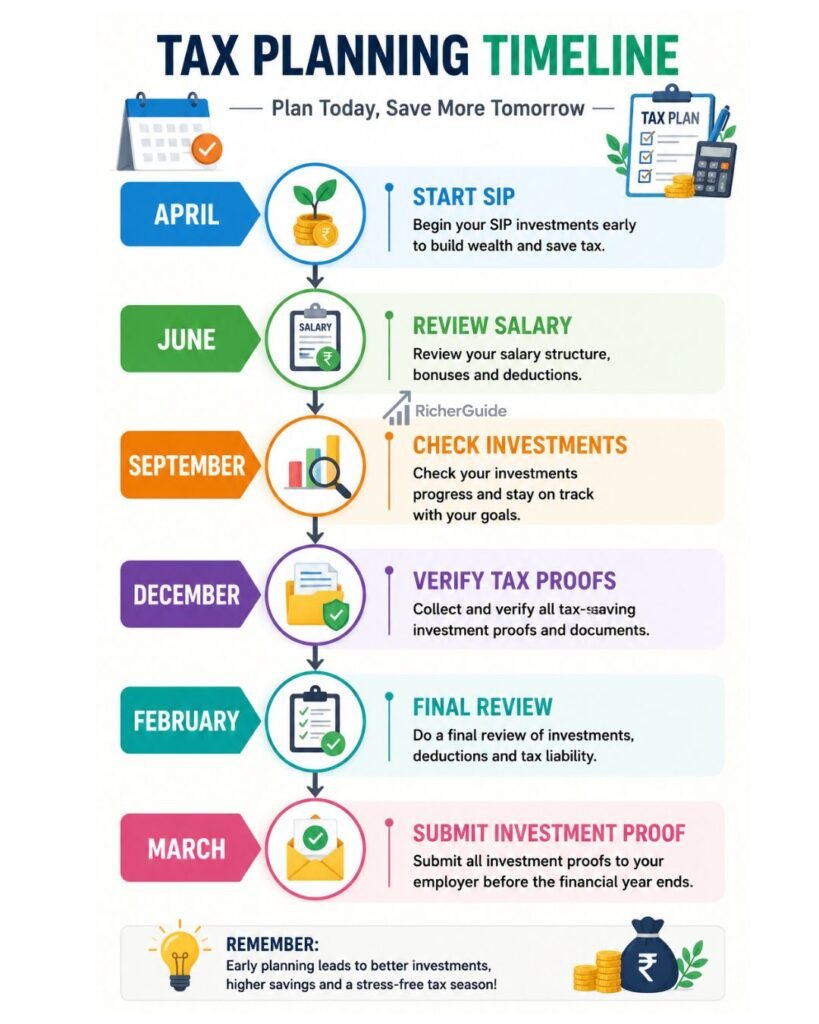
✔ Start tax planning from April instead of March
How Salary Tax Works
Your salary generally includes:
| Component | Taxable? |
|---|---|
| Basic Salary | Yes |
| Dearness Allowance | Yes |
| House Rent Allowance (Old Regime) | Partly |
| Special Allowance | Yes |
| Bonus | Yes |
| Leave Encashment | Depends |
| Employer PF Contribution | Subject to rules |
| Gratuity | Depends |
New Tax Regime (2026)
The New Tax Regime offers:
- Lower tax rates
- Fewer deductions
- Simpler tax filing
- Standard deduction available (subject to current rules)
- Better for many salaried employees without large deductions
Ideal for:
- Young professionals
- Employees without home loans
- People who don’t invest heavily under tax-saving sections
Old Tax Regime
Suitable if you claim:
- Home loan benefits
- Large HRA
- ELSS
- PPF
- NPS
- Health insurance deductions
- Education loan interest
Always compare both regimes before filing your return.
Tax Slabs (Illustrative)
| Annual Income | Estimated Tax Impact* |
|---|---|
| ₹5,00,000 | Usually minimal after applicable rebates |
| ₹10,00,000 | Moderate |
| ₹20,00,000 | Higher |
*Actual tax depends on the applicable financial year’s rules, deductions, surcharge, cess, and the tax regime selected.
Example 1
Salary = ₹5 Lakhs
Possible Situation
- Standard deduction
- No investments
Result:
Many taxpayers may have little or no tax liability if eligible for applicable rebates.
Example 2
Salary = ₹10 Lakhs
Possible planning:
- Employer NPS
- Tax-efficient investments
- Salary restructuring
- Health insurance (Old Regime)
Potential savings can be significant depending on deductions claimed.
Example 3
Salary = ₹20 Lakhs
High-income employees should consider:
- NPS
- Home loan planning
- Salary restructuring
- Professional financial planning
1. ELSS (Equity Linked Savings Scheme)
Best for:
- Wealth creation
- Tax saving (under eligible provisions in the Old Regime)
Pros
- Lowest lock-in among major tax-saving options
- Equity growth potential
- SIP available
Cons
- Market risk
- Returns are not guaranteed
2. Public Provident Fund (PPF)
Best for:
- Conservative investors
Pros
- Government-backed
- Tax-efficient
- Long-term savings
Cons
- Long lock-in
- Lower liquidity
3. National Pension System (NPS)
Best for:
- Retirement planning
Pros
- Low cost
- Long-term compounding
- Employer contribution benefits where applicable
Cons
- Partial withdrawal restrictions
- Pension purchase requirements at maturity (subject to prevailing rules)
ELSS vs PPF vs NPS
| Feature | ELSS | PPF | NPS |
|---|---|---|---|
| Risk | High | Low | Medium |
| Returns | Market Linked | Government Declared | Market Linked |
| Lock-in | 3 Years | 15 Years | Till Retirement (with withdrawal rules) |
| Liquidity | Good | Low | Limited |
| Suitable For | Young Investors | Safe Investors | Retirement Planning |
Tax Saving Checklist
✔ Choose the correct regime
✔ Verify Form 16
✔ Check AIS
✔ Match TDS
✔ Declare investments early
✔ Review salary slips
✔ Keep proof of investments
✔ File ITR before the due date
Salary Planning Tips
Instead of waiting until March:
- Invest monthly
- Increase SIP annually
- Build an emergency fund
- Avoid buying products only for tax savings
- Focus on long-term wealth creation
Salary Tax Calculator (Illustrative)
| Annual Salary | Approx Monthly Salary | Suggested Priority |
|---|---|---|
| ₹5,00,000 | ₹41,667 | Emergency Fund |
| ₹7,50,000 | ₹62,500 | Mutual Funds + Insurance |
| ₹10,00,000 | ₹83,333 | NPS + SIP |
| ₹15,00,000 | ₹1,25,000 | Portfolio Diversification |
| ₹20,00,000 | ₹1,66,667 | Advanced Tax Planning |
Investment Allocation Example
Monthly Salary

₹1,00,000

        │
        ▼

Needs (50%)           ₹50,000

Savings (30%)         ₹30,000

Lifestyle (20%)       ₹20,000
Tax Planning Timeline
Common Tax Mistakes
❌ Investing only in March
❌ Ignoring employer NPS
❌ Buying expensive insurance for tax saving
❌ Choosing the wrong tax regime
❌ Missing investment declarations
❌ Filing ITR late
❌ Not checking Form 26AS/AIS
Real-Life Example
Rahul
Salary: ₹10 lakh
He invests every month instead of March.
His plan:
- Monthly SIP
- NPS contribution
- Emergency fund
- Health insurance
- Annual tax review
Result:
- Better cash flow
- Disciplined investing
- Long-term wealth creation
- Optimized tax planning based on the applicable regime
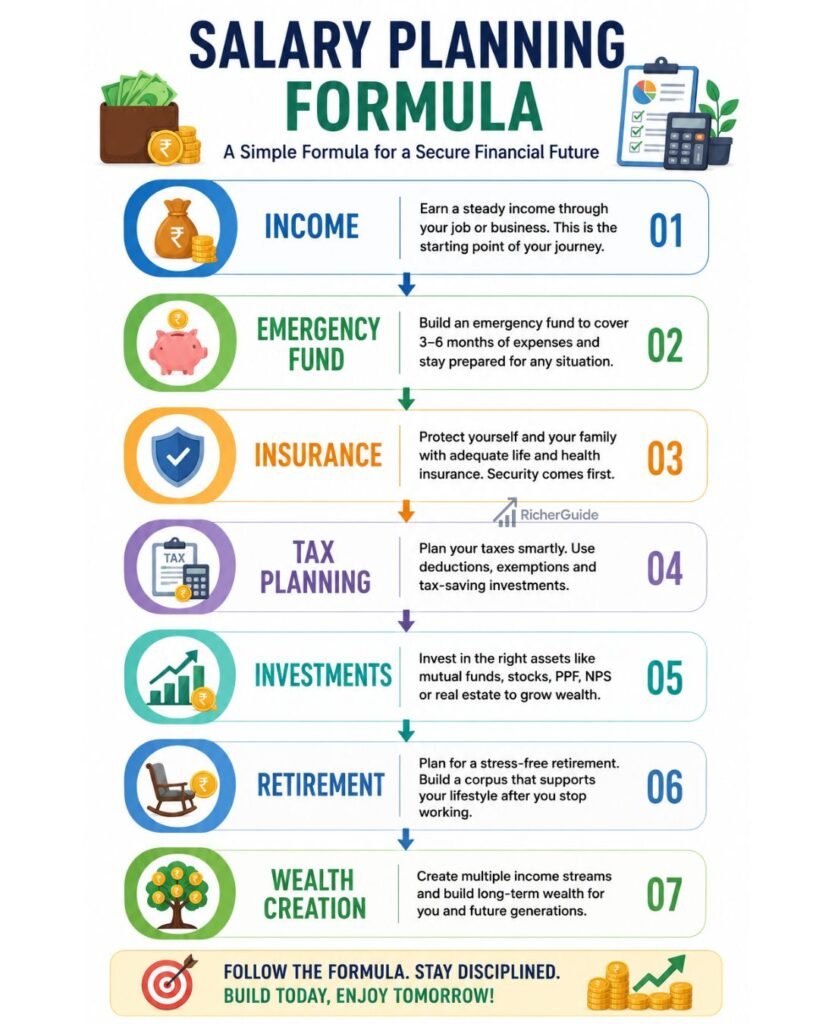
Salary Planning Formula
Best Practices
- Increase investments after every salary hike.
- Keep all tax documents organized.
- Review your tax strategy annually.Compare tax regimes everyfinancial year.
- Invest for goals first, tax benefits second.
Frequently Asked Questions (FAQ)
1. Which tax regime is better?
It depends on your deductions, exemptions, and financial goals. Compare both before filing your ITR.
2. Is ELSS better than PPF?
ELSS offers higher growth potential with market risk, while PPF provides government-backed stability and long-term savings.
3. Is NPS worth investing?
NPS is a good retirement-focused investment for long-term investors, especially if employer contributions are available.
4. Can I switch tax regimes?
Eligibility and switching rules depend on your income type and current income tax provisions. Check the latest government guidelines before filing.
5. When should tax planning start?
Ideally from April, at the beginning of the financial year.
6. Should I invest only to save tax?
No. Choose investments based on your financial goals, risk tolerance, and liquidity needs.
Affiliate Recommendation
If you use affiliate links on RicherGuide, consider recommending:
| Product | Why Recommend |
|---|---|
| Discount Broker | Start investing in ELSS and mutual funds |
| Direct Mutual Fund Platform | SIP and long-term investing |
| Tax Filing Software | Easy ITR filing |
| Personal Finance App | Expense tracking and budgeting |
| Term Insurance | Financial protection for family |
| Health Insurance | Reduce financial risk from medical expenses |
Key Takeaways
- Start tax planning at the beginning of the financial year.
- Compare the Old and New Tax Regimes before making a decision.
- Build wealth through disciplined investing rather than chasing tax deductions alone.
- Keep investment records and salary documents organized.
- Review your financial plan every year as tax rules and personal circumstances change.
Conclusion
Tax planning is not just about reducing your tax bill it is about building a stronger financial future. A well-planned strategy helps you manage your salary efficiently, invest wisely, and achieve long-term goals such as buying a home, funding your children’s education, or retiring comfortably.
Whether your annual salary is ₹5 lakh, ₹10 lakh, or ₹20 lakh, the right combination of budgeting, investing, and understanding the tax regime can make a meaningful difference to your finances. Review your salary structure, compare available tax options each year, and invest consistently instead of making last-minute decisions.
Remember, the best tax-saving plan is one that aligns with your overall financial goals—not just your tax liability.
Final Thoughts
Tax planning is not about finding loopholes it’s about making smart financial decisions throughout the year. Whether you’re earning ₹5 lakh, ₹10 lakh, or ₹20 lakh, the right tax strategy can help you keep more of your hard-earned money while building long-term wealth.
Instead of rushing to buy tax-saving products in the last few weeks of the financial year, start planning early. Compare the Old Tax Regime and New Tax Regime, choose investments that match your financial goals, and review your salary structure regularly. Remember, the best investment is not always the one that saves the most tax it’s the one that helps you achieve your life goals.
As tax rules evolve, staying informed is just as important as investing wisely. Make tax planning a yearly financial habit, keep your documents organized, and review your portfolio annually. Small, consistent decisions today can lead to significant tax savings and greater financial security in the future.
Smart tax planning today means more savings, more investments, and more financial freedom tomorrow.
Disclaimer
The information provided in this article is for educational and informational purposes only and should not be considered tax, legal, or financial advice. Income tax rules, deductions, exemptions, rebates, and tax slabs may change based on updates issued by the Government of India. Always verify the latest provisions applicable to the relevant financial year and consult a qualified Chartered Accountant (CA) or tax professional before making investment or tax-planning decisions. RicherGuide is not responsible for any financial loss arising from the use of this information.