Credit cards have become one of the most widely used financial tools in India. From online shopping and travel bookings to bill payments and reward points, credit cards offer convenience and flexibility.
However, many cardholders are unaware of important credit card rules and RBI regulations. This lack of knowledge often leads to unnecessary interest charges, penalties, poor credit scores, and even fraud losses.
If you use a credit card or plan to get one in 2026, understanding these rules can help you save money and avoid costly mistakes.
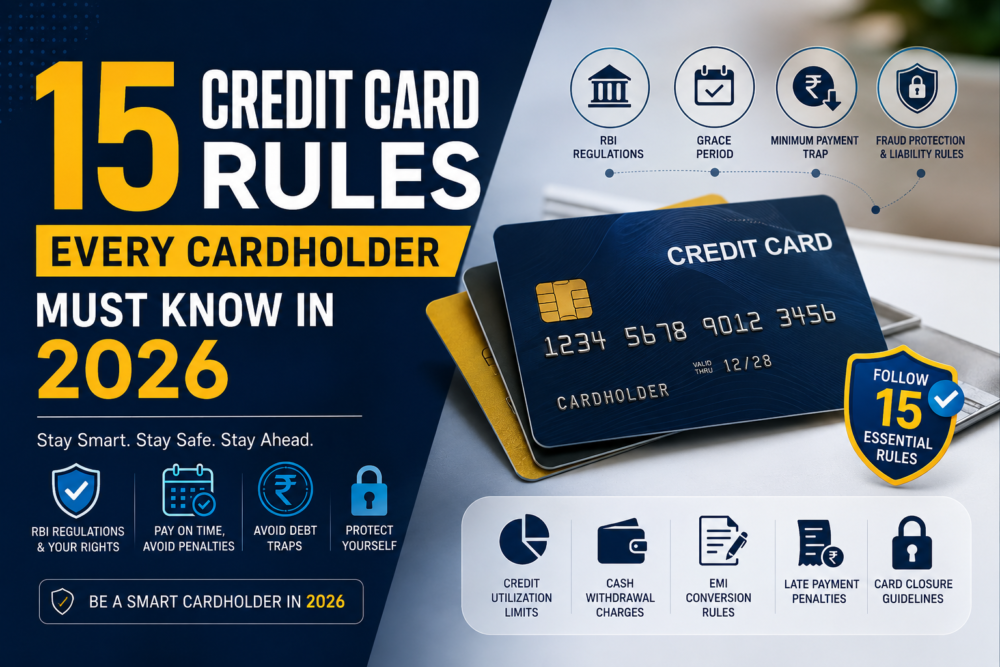
In this guide, we’ll cover the 15 most important credit card rules every Indian cardholder should know.
Table of Contents
The Problem: Why Most Credit Card Users Lose Money
Many cardholders believe:
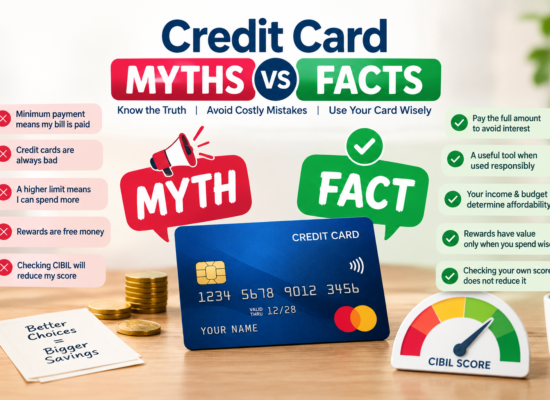
❌ Minimum payment is enough
❌ EMI conversions are always beneficial
❌ Reward points are free money
❌ Cash withdrawal works like debit cards
❌ Banks can charge anything they want
These misconceptions often result in:
- High interest payments
- Late fees
- Damaged credit scores
- Debt traps
- Fraud losses
Fortunately, RBI regulations have strengthened consumer protection in recent years.
Let’s understand the rules.
Quick Overview Table
| Rule | Why It Matters |
|---|---|
| Grace Period | Avoid interest charges |
| Minimum Payment | Prevent debt trap |
| Credit Utilization | Improve credit score |
| EMI Conversion | Understand true cost |
| Late Payment Fees | Avoid penalties |
| Cash Withdrawal | Prevent expensive charges |
| Fraud Protection | Limit liability |
| Card Closure Rules | Avoid unnecessary fees |
| Statement Verification | Detect errors |
| Auto-Debit Rules | Prevent missed payments |
| Reward Point Expiry | Maximize benefits |
| International Usage | Control foreign charges |
| Interest Calculation | Reduce costs |
| RBI Complaint Process | Resolve disputes |
| Credit Limit Management | Maintain healthy credit |
Rule 1: Always Understand the Grace Period
What Is It?
The grace period is the interest-free period between your purchase date and payment due date.
Usually:
- 18–55 days
- Depends on billing cycle
Example
Purchase Date: 2 January
Statement Date: 31 January
Due Date: 20 February
Interest-Free Period = 49 Days
Solution
Always pay the full statement balance before the due date.
Doing this means:
✅ Zero interest
✅ Better credit score
✅ Lower debt risk
Graphic: Credit Card Billing Cycle
Purchase → Statement Generated → Due Date

Jan 2 -------- Jan 31 -------- Feb 20

Interest Free Period = Up to 49 Days
Rule 2: Never Fall Into the Minimum Payment Trap
One of the biggest mistakes cardholders make is paying only the minimum amount due.
Example
Outstanding Balance = ₹50,000
Minimum Due = ₹2,500
Many people think:
“I paid the minimum amount, so I’m safe.”
Technically yes.
Financially no.
The remaining balance starts attracting interest.
Interest rates can exceed:
30%–48% annually
Solution
Always pay:
100% of statement balance
instead of
5% minimum due
Example Table
| Balance | Minimum Due | Interest Impact |
|---|---|---|
| ₹10,000 | ₹500 | High |
| ₹25,000 | ₹1,250 | Very High |
| ₹50,000 | ₹2,500 | Extremely High |
Rule 3: Keep Credit Utilization Below 30%
Credit utilization refers to:
Used Credit ÷ Total Credit Limit
Example
Credit Limit = ₹1,00,000
Used Amount = ₹80,000
Utilization = 80%
This negatively affects your credit score.
Recommended Levels
| Utilization | Rating |
|---|---|
| Below 30% | Excellent |
| 30%-50% | Good |
| 50%-75% | Risky |
| Above 75% | Poor |
Solution
Try to maintain utilization below 30%.
Rule 4: Understand RBI Credit Card Regulations
The Reserve Bank of India has introduced stronger consumer protection rules.
Key provisions include:
Consent Required
Banks cannot issue cards without explicit customer consent.
Billing Transparency
Charges must be clearly disclosed.
Faster Resolution
Complaints must be resolved within prescribed timelines.
Closure Requests
Banks must close cards within specified periods after request.
Why It Matters
These rules reduce unfair practices and improve transparency.
Rule 5: Know Late Payment Penalties
Missing a due date can trigger:
- Late fees
- Interest charges
- Credit score damage
Example
Outstanding Balance = ₹20,000
Late Fee = ₹500–₹1,300
Interest = Additional charges
Total Cost = Much higher than expected
Solution
Use:
✅ Auto-pay
✅ Calendar reminders
✅ SMS alerts
Rule 6: Credit Card Cash Withdrawals Are Expensive
Many people think a credit card can be used like an ATM card.
Technically yes.
Financially dangerous.
Charges Include
- Cash withdrawal fee
- Immediate interest
- No grace period
Example
Cash Withdrawal = ₹10,000
Withdrawal Fee = ₹300–₹500
Interest Starts Immediately
Solution
Avoid cash withdrawals unless it’s an emergency.
Rule 7: Understand EMI Conversion Rules
Many banks offer EMI conversion options.
Benefits
- Smaller monthly payments
- Easier budgeting
Risks
- Processing fees
- Interest charges
- Reduced available credit
Example
Purchase = ₹60,000
EMI Tenure = 12 Months
Interest Rate = 15%
Final Cost > ₹60,000
Solution
Always compare:
- Total EMI cost
- Available savings
- Alternative financing options
Rule 8: Check Every Monthly Statement
Many users never read their statements.
This is a major mistake.
Verify
- Transactions
- Interest charges
- Fees
- EMI conversions
- Reward points
Benefits
Detect:
- Unauthorized transactions
- Billing errors
- Fraud
before they become larger problems.
Rule 9: Understand Fraud Protection Rules
RBI has strengthened fraud protection.
If You Report Quickly
Your liability may be:
Zero
or significantly limited.
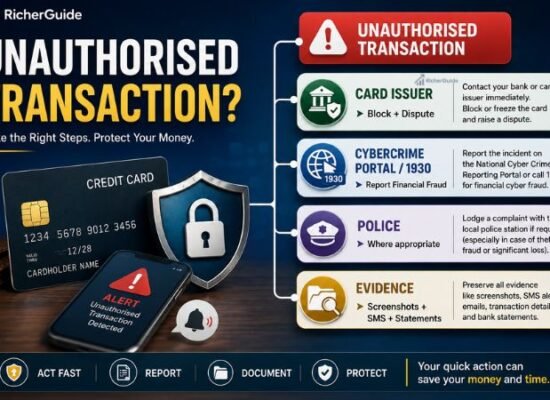
Steps
- Block card immediately
- Notify bank
- File dispute
- Monitor account
Fraud Reporting Flow
Suspicious Transaction
          ↓
Report to Bank
          ↓
Card Blocked
          ↓
Investigation
          ↓
Liability Reduced
Rule 10: Protect Your Card Information
Never share:
- CVV
- OTP
- PIN
- Card number screenshots
Common Scams
- Fake KYC calls
- Reward point scams
- Fake bank representatives
- Phishing emails
Solution
Remember:
Banks never ask for OTP.
Never share it.
Rule 11: Understand Reward Point Rules
Reward points can be valuable.
But many expire.
Common Conditions
- Expiry periods
- Redemption fees
- Category restrictions
Example
10,000 points earned
Expiry after 24 months
Unused points = Lost value
Solution
Track reward points regularly.
Rule 12: International Transaction Rules
International spending often involves:
- Forex markup fees
- Currency conversion charges
Example
Purchase = $100
Forex Fee = 3.5%
Additional Cost = ₹250–₹350+
Solution
Choose cards with:
- Low forex markup
- Travel rewards
Rule 13: Know How Interest Is Calculated
Credit card interest is typically charged monthly but calculated daily.
Example
Outstanding Balance = ₹1,00,000
Interest Rate = 3.5% Monthly
Monthly Interest = ₹3,500
Annualized Cost ≈ 42%
Solution
Pay balances in full whenever possible.
Rule 14: Understand Card Closure Guidelines
Many users think unused cards automatically close.
They usually don’t.
RBI Guidelines
When you request closure:
- Banks must process closure within prescribed timelines.
- Outstanding dues must be cleared first.
Before Closing
Check:
- Reward points
- Pending EMIs
- Annual fee renewal
Benefits
Proper closure prevents future disputes.
Rule 15: Know Your Rights for Complaints
If a bank fails to resolve your issue:
Escalation Process
Bank Customer Care
         ↓
Nodal Officer
         ↓
Principal Nodal Officer
         ↓
RBI Ombudsman
Common Complaint Areas
- Unauthorized charges
- Card closure delays
- Billing disputes
- Refund issues
- Fraud claims
Credit Card Cost Calculator
Use this simple formula:
Interest Cost
Outstanding Balance × Monthly Interest RateExample
₹50,000 × 3.5%
= ₹1,750 per month
Annual Cost:
₹1,750 × 12
= ₹21,000
This shows why carrying balances is expensive.
Credit Card Health Score Table
| Factor | Ideal Range |
|---|---|
| Utilization | Below 30% |
| Payment History | 100% On-Time |
| EMI Usage | Moderate |
| Cash Withdrawals | Zero |
| Late Payments | None |
| Credit Score | 750+ |
Real-Life Example
Rahul owns a credit card with:
- ₹1 lakh limit
- ₹70,000 usage
- Pays minimum due only
After 12 months:
❌ High interest
❌ Lower credit score
❌ Debt burden
Instead, if Rahul:
✅ Keeps utilization below 30%
✅ Pays full bill
✅ Avoids cash withdrawals
He saves thousands in interest annually.
Best Practices Checklist for 2026
✅ Pay full balance
✅ Never miss due dates
✅ Monitor statements
✅ Enable transaction alerts
✅ Keep utilization below 30%
✅ Avoid ATM withdrawals
✅ Use reward points before expiry
✅ Understand EMI costs
✅ Report fraud immediately
✅ Know RBI complaint procedures
Frequently Asked Questions (FAQs)
1. What is the most important credit card rule?
Pay your full statement balance before the due date to avoid interest charges.
2. Is paying the minimum amount enough?
No. It avoids default but leads to expensive interest charges.
3. What is a good credit utilization ratio?
Below 30% is generally considered healthy.
4. Can I withdraw cash using a credit card?
Yes, but it attracts fees and immediate interest charges.
5. How quickly should I report fraud?
Immediately. Faster reporting usually reduces customer liability.
6. Can I close my credit card anytime?
Yes, provided outstanding dues are cleared.
7. Does closing a credit card affect credit score?
It may temporarily affect your score if it reduces your available credit limit.
8. Are reward points taxable?
Usually not during redemption, but tax rules may vary depending on rewards and usage.
Recommended Credit Card Categories (Affiliate Section)
Disclosure: If you apply through affiliate links, we may earn a commission at no additional cost to you.
Cashback Credit Cards
Best for:
- Online shopping
- Utility bills
- Everyday spending
Ideal Users
- Salaried professionals
- Families
- Beginners
Travel Credit Cards
Best for:
- Frequent flyers
- International travelers
Benefits:
- Airport lounge access
- Travel rewards
- Low forex charges
Fuel Credit Cards
Best for:
- Daily commuters
- Vehicle owners
Benefits:
- Fuel surcharge waiver
- Fuel rewards
Premium Rewards Cards
Best for:
- High spenders
Benefits:
- Luxury benefits
- Reward points
- Concierge services
Conclusion
Credit cards can be powerful financial tools when used responsibly. However, many users lose money simply because they don’t understand the rules governing their cards.
By following these 15 essential credit card rules in 2026, you can:
✔ Avoid unnecessary interest charges
✔ Protect your credit score
✔ Prevent fraud losses
✔ Maximize rewards
✔ Stay compliant with RBI regulations
The key is simple: spend responsibly, pay on time, keep utilization low, and understand your rights as a cardholder. A credit card should help build your financial future—not become a source of debt.
Disclaimer
This article is for educational and informational purposes only and should not be considered financial, legal, tax, or investment advice. Credit card features, fees, interest rates, rewards programs, RBI regulations, and bank policies may change over time. Readers should verify the latest terms and conditions directly with their credit card issuer and consult a qualified financial advisor before making financial decisions. RicherGuide is not responsible for any losses arising from the use of information provided in this article.