Saving money sounds simple. Spend less. Save more.
But in real life, many people struggle to save money. Even people with good salaries often say, “I do not know where my money goes.”
If you feel the same, do not worry. You are not alone.
Table of Contents
In this blog, we will understand why most people fail to save money and simple ways to fix each problem.
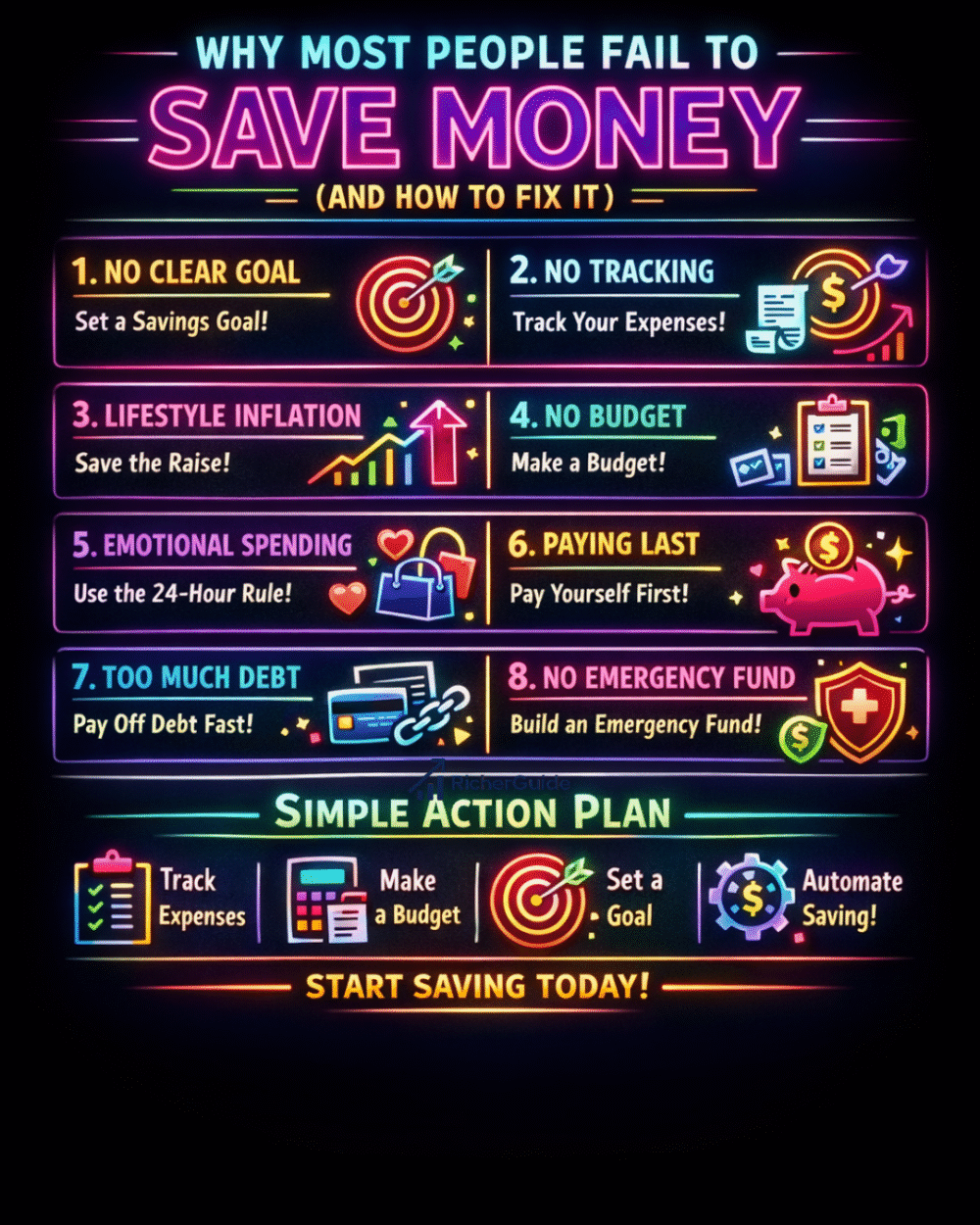
1. No Clear Goal
Many people say, “I want to save money.”
But they do not have a clear reason.
Saving without a goal feels boring. It feels like punishment.
How to Fix It:
Set a clear goal:
- Emergency fund
- Vacation
- New phone
- Home down payment
- Financial freedom
When you know why you are saving, it becomes easier.
Write your goal on paper. Keep it where you can see it daily.
2. Spending Without Tracking
If you do not track your expenses, money disappears quickly.
Small daily expenses like:
- Coffee
- Online shopping
- Food delivery
- Subscriptions
These small amounts add up.
How to Fix It:
Track your expenses for 30 days.
You can:
- Use a notebook
- Use a budgeting app
- Use Excel
After one month, you will clearly see where your money goes.
Awareness is the first step to saving.
3. Lifestyle Inflation
When income increases, expenses also increase.
You get a raise, and suddenly:
- Better phone
- Better car
- More eating out
- More shopping
This is called lifestyle inflation.
You earn more, but you do not save more.
How to Fix It:
When your income increases:
- Save at least 50% of the extra income
- Upgrade lifestyle slowly
- Increase investments before expenses
Act like your income did not increase.
4. No Budget Plan
Many people think budgeting is difficult.
But without a budget, you are guessing your finances.
A budget gives direction to your money.
How to Fix It:
Try the simple 50/30/20 rule:
- 50% needs (rent, food, bills)
- 30% wants (entertainment, shopping)
- 20% savings
If 20% feels too much, start with 10%. The important thing is to start.
5. Emotional Spending
Sometimes we spend money because we are:
- Stressed
- Sad
- Bored
- Excited
Shopping gives temporary happiness.
But later, it creates regret.
How to Fix It:
Before buying, ask:
- Do I really need this?
- Will I use this after 30 days?
- Can I wait 24 hours?
The 24-hour rule works very well. Delay impulse purchases.
6. Not Paying Yourself First
Most people save what is left at the end of the month.
But usually, nothing is left.
Saving should not be the last step. It should be the first step.
How to Fix It:
Pay yourself first.
As soon as you receive salary:
- Transfer savings immediately
- Set automatic transfer to savings account
- Invest automatically
Make saving automatic so you do not have to think about it.
7. Too Much Debt
Credit cards and loans make saving difficult.
High interest payments eat your income.
If you are paying interest, you are working for the bank.
How to Fix It:
Focus on paying high-interest debt first.
You can use:
- Snowball method (smallest debt first)
- Avalanche method (highest interest first)
Avoid using credit card for unnecessary purchases.
8. No Emergency Fund
Without emergency savings, every small problem becomes a financial crisis.
Medical emergency
Job loss
Car repair
Then you use credit cards again.
It becomes a cycle.
How to Fix It:
Start building an emergency fund.
Goal:
- 3 to 6 months of expenses
Start small:
- Save one month of expenses first
- Then slowly build more
Keep this money separate from your main account.
9. Lack of Financial Education
Many people were never taught about money in school.
They know how to earn money.
But they do not know how to manage it.
Without knowledge, mistakes happen.
How to Fix It:
Start learning about money:
- Read finance blogs
- Watch educational videos
- Listen to finance podcasts
- Read simple money books
Spend at least 10 minutes daily learning about personal finance.
Knowledge increases confidence.
Simple Action Plan to Start Saving Today
If you feel overwhelmed, follow this simple 5-step plan:
- Track your expenses for 30 days.
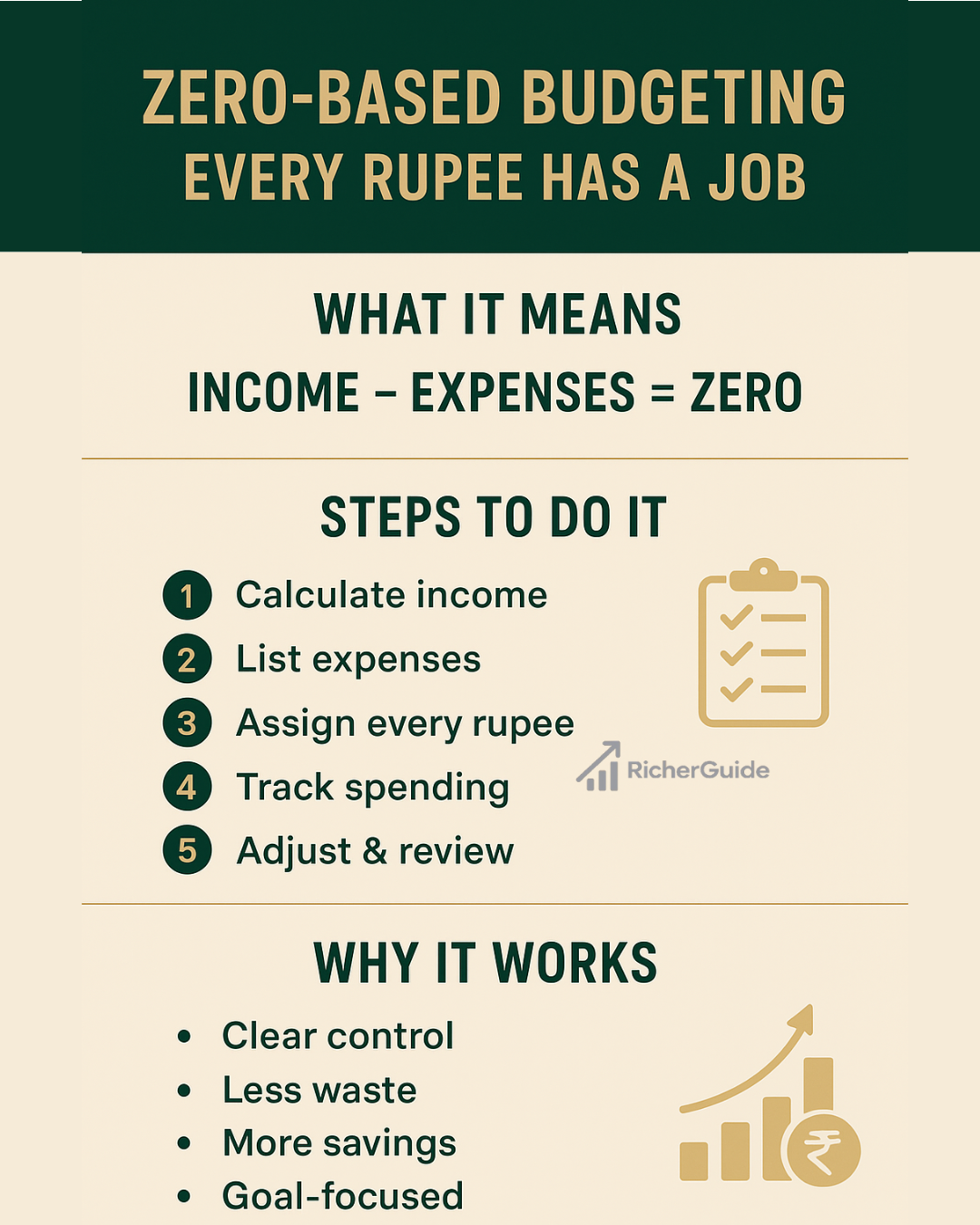
- Create a basic budget.
- Set one clear savings goal.
- Automate your savings.
- Cut one unnecessary expense.
Small actions create big results over time.
Top 5 Frequently Asked Questions (FAQs)
1. Why do most people struggle to save money?
Common reasons include spending more than they earn, not following a budget, lifestyle inflation, impulse buying, high debt, and the absence of clear financial goals. Identifying these habits is the first step toward improving your savings.
2. How much of my income should I save every month?
A common guideline is to save at least 20% of your income, but the ideal amount depends on your financial goals, expenses, and income. The key is to save consistently, even if you start with a smaller amount.
3. What is the easiest way to start saving money?
Automate your savings by setting up an automatic transfer to a savings or investment account each month. Creating a budget and tracking your expenses can also help you identify areas where you can save more.
4. Can I save money even if I have a low income?
Yes. Saving is more about consistency than the amount. Cutting unnecessary expenses, avoiding impulse purchases, and saving small amounts regularly can help you build financial security over time.
5. How can I stay motivated to save money?
Set clear financial goals, celebrate small milestones, monitor your progress regularly, and remind yourself why you’re saving whether it’s for an emergency fund, a home, retirement, or financial independence. A strong purpose makes it easier to stay disciplined.
Conclusion
Saving money is rarely about earning more it’s about building better financial habits. Many people struggle to save because of lifestyle inflation, impulsive spending, lack of budgeting, or unclear financial goals. The good news is that these challenges can be overcome with consistent effort and smart money management.
Start by understanding where your money goes, create a realistic budget, automate your savings, and focus on long-term financial goals instead of short-term temptations. Even small savings made consistently can grow significantly over time through discipline and the power of compounding.
Remember, financial freedom isn’t achieved overnight. Every rupee you save today brings you one step closer to a more secure and stress-free future. The best time to start saving is now
Final Thoughts
Everyone faces financial challenges at some point, but the difference between those who build wealth and those who struggle often comes down to daily habits. You don’t need a perfect budget or a high income to become a successful saver you simply need consistency and commitment.
Don’t let past mistakes discourage you. Start with one positive financial habit today, whether it’s saving a small amount each month, cutting unnecessary expenses, or tracking your spending. Over time, these small actions can create life-changing financial results.
Your future financial security depends on the choices you make today. Save with purpose, spend wisely, and let your money work toward the life you want to build.
Remember:
Saving money is not restriction.
It is freedom.
The sooner you fix your money habits, the sooner you gain financial peace.
Start today.
Disclaimer
The information provided in this article is for educational and informational purposes only and should not be considered financial, investment, legal, or tax advice. The money-saving tips and strategies discussed are general recommendations and may not be suitable for every individual’s financial situation.
Before making financial decisions, consider your income, expenses, financial obligations, and long-term goals. If you need personalized financial guidance, consult a qualified financial advisor or certified financial planner.
RicherGuide does not guarantee specific financial results. Readers are encouraged to conduct their own research and make informed decisions based on their personal financial circumstances.