Life is full of surprises. Some are good, but many are expensive. A sudden job loss, medical emergency, car repair, or urgent home expense can happen at any time. This is why an emergency fund is one of the important money habits you can build.
An emergency fund gives you peace of mind. It protects you from debt and helps you stay financially stable during tough times. In this blog, we will explain what an emergency fund is, how much you really need, and how you can build it fast even with a low income.
Table of Contents
What Is an Emergency Fund?
An emergency fund is money you save only for unexpected expenses. It is not for shopping, travel, or regular bills. This money is kept aside to help you handle emergencies without using credit cards or loans.
Common emergencies include:
Having a financial cushion is crucial for stability.
- Medical bills
- Job loss or pay cut
- Car or bike repair
- Urgent home repairs
- Family emergencies
Think of an emergency fund as your financial safety net. When something goes wrong, this fund catches you.
Why Is an Emergency Fund So Important?
Many people ignore emergency savings because they feel it is not urgent. But emergencies do not come with a warning.
Here’s why an emergency fund matters:
- It keeps you out of debt
- It reduces stress and anxiety
- It gives you time to make better decisions
- It protects your long-term savings and investments
Without an emergency fund, one unexpected expense can destroy months or years of financial progress.
How Much Emergency Fund Do You Need?
The right amount depends on your lifestyle, income, and responsibilities. But there is a simple rule that works for most people.
The 3–6 Months Rule
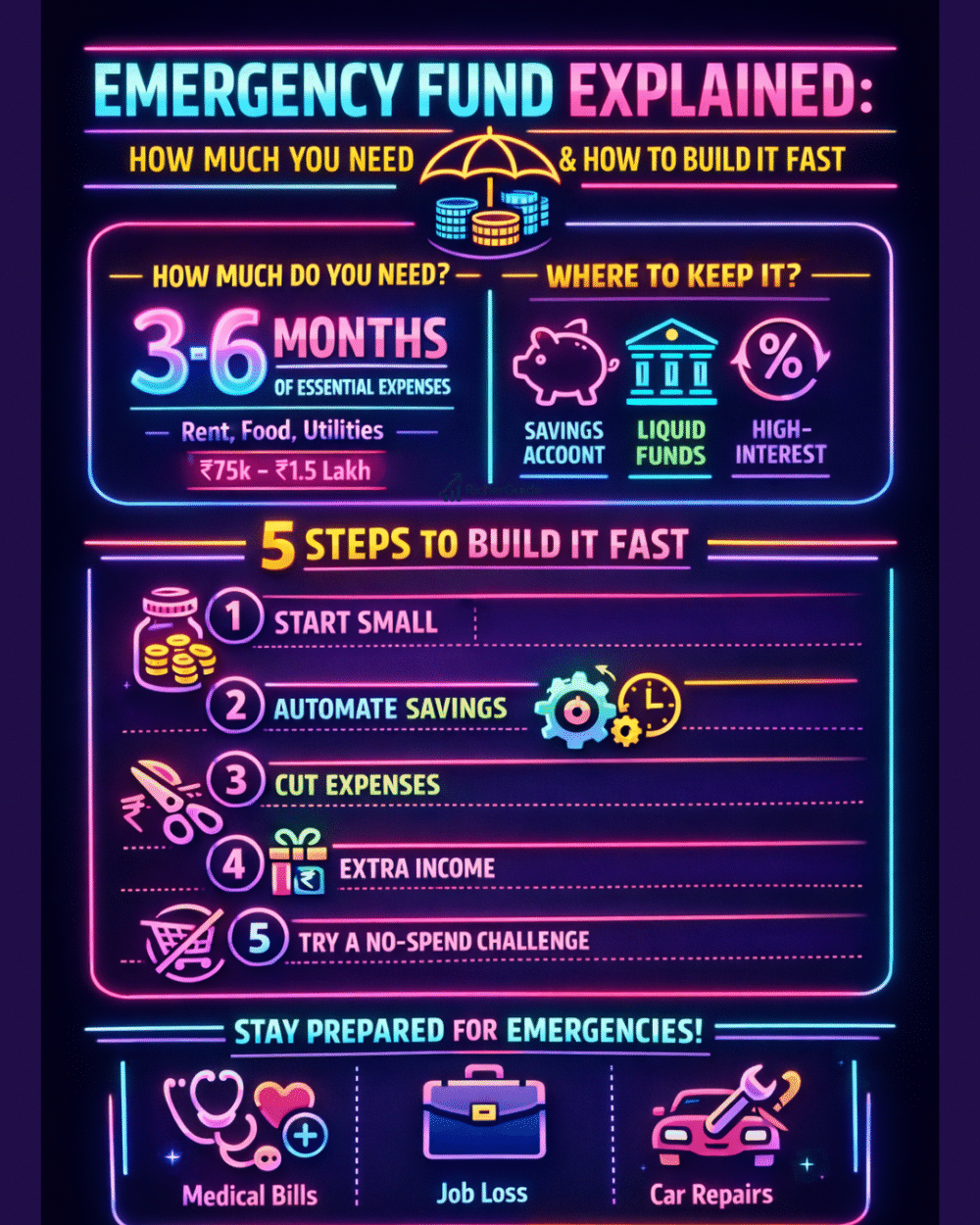
You should save 3 to 6 months of essential expenses.
Essential expenses include:
- Rent or home loan
- Food and groceries
- Utilities (electricity, water, internet)
- Transport
- Insurance premiums
For example:
If your monthly essential expenses are ₹25,000:
- 3 months = ₹75,000
- 6 months = ₹1,50,000
Start with 3 months first. Once that is done, aim for 6 months.
Who Needs a Bigger Emergency Fund?
You should aim for 6 months or more if:
- You are self-employed or a freelancer
- Your income is irregular
- You have dependents
- You work in an unstable job sector
If you have a stable job and multiple income sources, 3–4 months may be enough.
Where Should You Keep Your Emergency Fund?
Your emergency fund should be:
- Easy to access
- Safe
- Not affected by market ups and downs
Best options:
- Savings account
- High-interest savings account
- Liquid mutual funds
Avoid keeping emergency money in:
- Stocks
- Crypto
- Long-term investments
- Fixed assets like gold or real estate
You need this money fast, not after waiting or selling at a loss.
How to Build an Emergency Fund
Building an emergency fund may feel difficult, but it is possible with the right steps.
1. Start Small
Do not wait to save a big amount. Start with a small goal like ₹10,000 or ₹25,000. Small wins keep you motivated.
2. Automate Your Savings
Set up an automatic transfer to your emergency fund account every month. Treat it like a bill you must pay.
Even ₹1,000–₹2,000 per month makes a difference.
3. Cut Unnecessary Expenses
Review your spending. Cancel unused subscriptions, reduce eating out, and avoid impulse buying. Redirect that money to your emergency fund.
4. Use Extra Income
Whenever you get:
- Bonus
- Tax refund
- Gift money
- Side income
Put at least a part of it into your emergency fund.
5. Try a No-Spend Challenge
Choose one month where you spend only on essentials. The money you save can go straight into your emergency fund.
How Long Does It Take to Build an Emergency Fund?
There is no fixed time. It depends on your income and savings rate.
Example:
If you save ₹5,000 per month:
- ₹60,000 fund = 12 months
If you save ₹10,000 per month:
- ₹1,20,000 fund = 12 months
The key is consistency, not speed.
Common Emergency Fund Mistakes to Avoid
- Using emergency money for shopping or travel
- Keeping it locked in long-term investments
An emergency fund only works if you respect its purpose.
What to Do After Your Emergency Fund Is Ready
Once your emergency fund is complete:
- Start investing for long-term goals
- Build sinking funds for planned expenses
- Increase insurance coverage if needed
Your emergency fund becomes the strong base of your financial life.
Top 5 Frequently Asked Questions (FAQs)
1. What is an emergency fund?
An emergency fund is money set aside specifically for unexpected expenses such as medical bills, job loss, urgent repairs, or other financial emergencies. It should be easily accessible and separate from your regular spending account.
2. How much should I keep in an emergency fund?
A common recommendation is to save 3–6 months of essential living expenses. If your income is unstable or you have dependents, you may want to aim for a larger emergency fund.
3. Where should I keep my emergency fund?
Keep it in a safe and liquid account, such as a high-interest savings account, bank savings account, or liquid mutual fund, where you can access the money quickly when needed.
4. Can I start an emergency fund with a small amount?
Yes. Starting with ₹100, ₹500, or ₹1,000 per month is perfectly fine. The most important thing is to build the habit of saving consistently.
5. When should I use my emergency fund?
Use it only for genuine emergencies unexpected medical expenses, loss of income, urgent home or vehicle repairs, or other essential expenses that cannot be postponed. Avoid using it for vacations, shopping, or planned purchases.
Conclusion
An emergency fund is one of the most important financial safety nets you can build. It protects you from unexpected expenses such as medical emergencies, job loss, car repairs, or urgent home maintenance without forcing you into debt. The good news is that you don’t need a large salary to start consistent saving, even in small amounts, can create a meaningful emergency fund over time.
By following the five simple steps in this guide setting a clear goal, creating a dedicated savings account, cutting unnecessary expenses, automating savings, and increasing contributions whenever possible you can build your emergency fund faster than you think.
Remember, financial security is built gradually. Every rupee you save today increases your peace of mind tomorrow.
Final Thoughts
An emergency fund is not optional it is essential. It gives you freedom, confidence, and financial security. You do not need to be rich to start. You just need to start.
Life is unpredictable, but your finances don’t have to be. An emergency fund gives you confidence, reduces financial stress, and helps you handle unexpected situations without disrupting your long-term goals.
Don’t wait for the “perfect time” to start saving. Begin with whatever amount you can afford today, stay consistent, and celebrate small milestones along the way. Over time, those small deposits can become a strong financial cushion.
The goal isn’t perfection it’s preparation. Start building your emergency fund now, and give your future self the security and stability it deserves.
Disclaimer
The information provided in this article is for educational and informational purposes only and should not be considered financial, investment, legal, or tax advice. The emergency fund strategies discussed are general recommendations and may not be suitable for every individual’s financial situation.
Before making financial decisions, evaluate your income, expenses, debts, financial goals, and personal circumstances. If you need personalized financial guidance, consult a qualified financial advisor.
RicherGuide does not guarantee specific financial outcomes. Readers should conduct their own research and make informed decisions based on their individual financial needs and objectives.