Managing money can feel stressful, especially when you have to track every expense. Many people start budgeting with good intentions but give up after a few weeks because it becomes too complicated. Spreadsheets, budgeting apps, and expense tracking can take time and effort.
This is where the No-Budget Budget Method comes in.
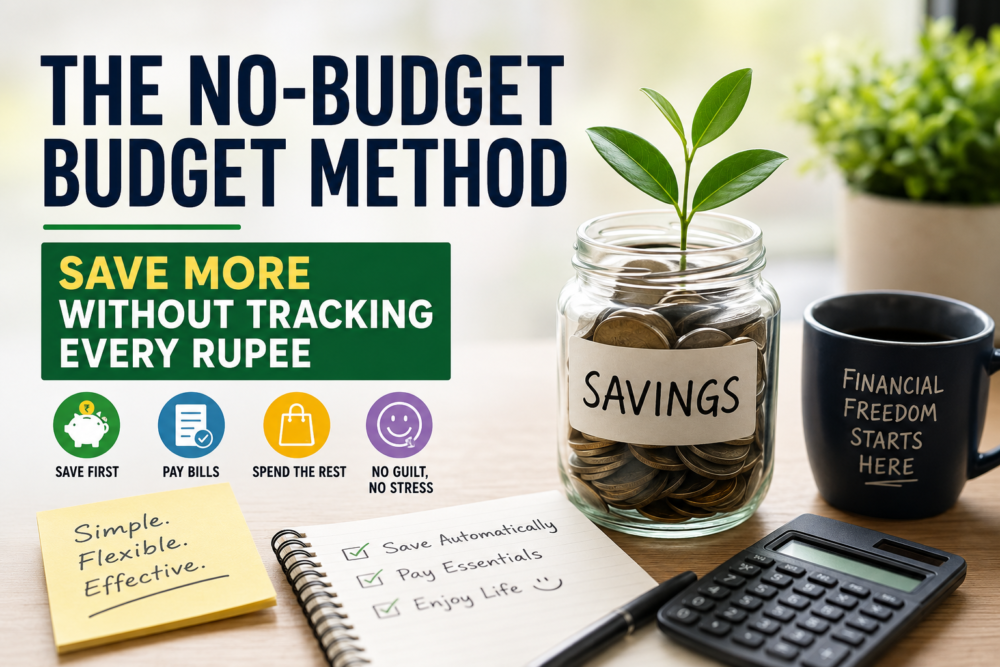
The No-Budget Budget is becoming popular because it is simple, flexible, and easy to follow. Instead of tracking every rupee you spend, this method focuses on saving first and spending the rest without guilt.
If traditional budgeting feels overwhelming, this beginner-friendly approach may be exactly what you need.
Table of Contents
What Is the No-Budget Budget Method?
The No-Budget Budget Method is a simple money management strategy where you prioritize your savings and essential bills first. After that, you are free to spend the remaining money however you want.
Unlike traditional budgeting, you do not categorize every purchase or record every transaction.
The basic idea is simple:
- Get paid.
- Save a predetermined amount immediately.
- Pay your essential bills.
- Spend the remaining money freely.
That’s it.
There are no complicated spreadsheets, daily expense tracking, or endless budget categories.
Why Traditional Budgets Often Fail
Many people struggle with traditional budgeting because it requires constant attention.
Common problems include:
- Tracking every expense becomes tiring.
- Small purchases are easy to forget.
- Budget categories can feel restrictive.
- Life changes make budgets difficult to maintain.
- People lose motivation after a few weeks.
When budgeting feels like a full-time job, it becomes difficult to stay consistent.
The No-Budget Budget removes much of this friction and makes money management easier.
Why the No-Budget Budget Method Works
1. It Is Simple
Simplicity is the biggest reason this method works.
Instead of managing dozens of spending categories, you focus on one main goal: saving money first.
The fewer decisions you need to make, the easier it becomes to stick with your financial plan.
2. It Reduces Financial Stress
Many people feel guilty every time they spend money while following strict budgets.
The No-Budget Budget removes this pressure.
Once your savings goals and bills are covered, you can spend the remaining money without constantly worrying about breaking your budget.
This creates a healthier relationship with money.
3. It Encourages Consistent Saving
The method follows a “pay yourself first” approach.
Because savings are transferred before spending begins, you are less likely to spend money that should have been saved.
Over time, these automatic savings can grow into:
- Emergency funds
- Vacation funds
- Investment contributions
- Home down payment savings
- Retirement savings
Consistency matters more than perfection.
4. It Fits Modern Lifestyles
Today’s spending habits are different from the past.
People use digital payments, online shopping, subscriptions, and food delivery services.
Tracking every transaction can quickly become overwhelming.
The No-Budget Budget works well because it adapts to modern lifestyles without requiring detailed monitoring.
5. It Prevents Budget Burnout
Many people experience budget fatigue.
At first, they track every rupee carefully. After a few weeks, they become exhausted and quit completely.
The No-Budget Budget is easier to maintain because there is less work involved.
A system you can follow for years is better than a perfect budget you abandon after a month.
6. It Gives You More Freedom
Financial freedom is one of the biggest benefits of this method.
After meeting your savings goals and paying bills, you can spend without overthinking every purchase.
Want to enjoy a meal at a restaurant?
Go ahead.
Want to buy a small gift?
No problem.
Because your financial priorities have already been handled, you can enjoy your money without guilt.
7. It Helps Beginners Build Better Habits
People who are new to personal finance often feel overwhelmed by budgeting advice.
The No-Budget Budget provides an easy starting point.
Instead of learning complex budgeting systems, beginners can focus on one important habit:
Saving first.
This simple habit alone can dramatically improve long-term financial health.
How to Start the No-Budget Budget Method
Step 1: Calculate Your Monthly Income
Start by determining how much money you bring home each month after taxes.
Include:
- Salary
- Freelance income
- Side hustle earnings
- Rental income
- Other regular income sources
Knowing your actual monthly income is the foundation of the system.
Step 2: Set a Savings Goal
Decide how much money you want to save every month.
A common recommendation is:
- 10% of income for beginners
- 20% of income if possible
For example:
If your monthly income is ₹50,000:
- Save ₹5,000 to ₹10,000 immediately after receiving your salary.
Choose a realistic amount that you can maintain consistently.
Step 3: Automate Your Savings
Automation is the secret to making this system work.
Set up an automatic transfer from your salary account to:
- Savings account
- Emergency fund
- Investment account
- Retirement account
When savings happen automatically, you remove temptation and reduce decision-making.
Step 4: Pay Essential Expenses
After savings, pay your necessary monthly expenses.
These may include:
- Rent
- Utilities
- Internet
- Insurance
- Loan payments
- Groceries
- Transportation
These expenses should always come before discretionary spending.
Step 5: Spend the Rest Freely
Whatever remains after savings and bills becomes your spending money.
You do not need to track every coffee, snack, or online purchase.
The key is ensuring that savings and essentials have already been covered.
Example of the No-Budget Budget
Let’s look at a simple example.
Monthly Income: ₹60,000
Savings (20%): ₹12,000
Essential Expenses:
- Rent: ₹15,000
- Utilities: ₹3,000
- Groceries: ₹8,000
- Transportation: ₹4,000
- Insurance: ₹3,000
Total Essentials: ₹33,000
Savings + Essentials = ₹45,000
Remaining Money = ₹15,000
That ₹15,000 can be used for:
- Entertainment
- Shopping
- Dining out
- Hobbies
- Travel savings
No daily expense tracking required.
Who Should Use the No-Budget Budget Method?
This method works best for:
Beginners
People who are new to budgeting often find traditional systems overwhelming.
Busy Professionals
Those with demanding schedules may not have time to track every expense.
People Who Hate Budgeting
If budgeting feels restrictive and stressful, this approach can be a better fit.
Individuals with Stable Income
The method works especially well for people with predictable monthly earnings.
When This Method May Not Work
Although effective for many people, the No-Budget Budget is not perfect for everyone.
It may be less suitable if:
- You have significant debt problems.
- Your spending is completely out of control.
- Your income changes dramatically every month.
- You frequently overspend your available money.
In these situations, a more structured budgeting system may provide better control.
Tips to Make the No-Budget Budget Successful
Build an Emergency Fund
Before focusing on other financial goals, aim to save at least three to six months of living expenses.
Review Your Finances Monthly
You do not need daily tracking, but a monthly review helps ensure you stay on course.
Increase Savings Over Time
Whenever your income increases, consider raising your savings rate.
Avoid Lifestyle Inflation
Many people spend every salary increase they receive.
Instead, direct part of those increases toward savings and investments.
Keep Financial Goals Visible
Whether you are saving for a home, vacation, or retirement, seeing your goals regularly helps maintain motivation.
The Future of Budgeting Is Simpler
In 2026, more people are moving away from complicated financial systems and embracing simpler approaches.
The No-Budget Budget Method reflects this trend.
Rather than obsessing over every transaction, people are focusing on what truly matters:
- Saving consistently
- Building financial security
- Reducing stress
- Enjoying life responsibly
The goal is not perfect budgeting.
The goal is making steady progress toward financial freedom.
Final Thoughts
The No-Budget Budget Method proves that managing money does not have to be complicated.
By saving first, paying essential expenses, and spending the rest without guilt, you can build better financial habits while avoiding the stress of tracking every rupee.
For beginners, busy professionals, and anyone tired of traditional budgeting, this method offers a practical and sustainable way to take control of their finances.
Remember, the best budget is not the most detailed one.
It is the one you can actually follow consistently.
Start small, automate your savings, and let simplicity work in your favor.