The world of investing is changing rapidly. In the past, investing in real estate or stocks often required large amounts of money. Many people could not afford to buy a property or invest in high-priced company shares.
Today, a new trend called asset tokenization is making investing more accessible. Investors can now buy small portions of real estate, stocks, and other valuable assets through digital tokens.
As blockchain technology becomes more popular, tokenized assets are moving into mainstream finance. Many experts believe this could be one of the biggest changes in investing over the next decade.
In this article, we will explain what tokenized assets are, how they work, their benefits and risks, and why they are becoming a major investment trend in 2026.
Table of Contents
What Are Tokenized Assets?
Tokenized assets are real-world assets that are converted into digital tokens using blockchain technology.
Each token represents ownership of a portion of an asset. Instead of buying an entire property or stock, investors can purchase a fraction of it through tokens.
For example:
- A $500,000 property can be divided into 500,000 tokens.
- Each token may represent a small ownership share.
- Investors can buy as many tokens as they want.
This process makes expensive investments available to more people.
Common tokenized assets include:
- Real estate
- Stocks
- Bonds
- Precious metals
- Art collections
- Commodities
- Private company shares
Why Asset Tokenization Is Trending in 2026
Several factors are driving the growth of tokenized investments.
1. Lower Investment Barriers
Traditionally, buying real estate required a large down payment. High-priced stocks also kept many investors away.
Tokenization allows people to invest with smaller amounts of money.
Someone with $50 or $100 can potentially gain exposure to assets that were once only available to wealthy investors.
This democratization of investing is attracting millions of new investors.
2. Fractional Ownership
One of the biggest advantages of tokenized assets is fractional ownership.
Instead of purchasing an entire asset, investors own a percentage of it.
For example:
- 0.01% of a commercial building
- A fraction of a luxury apartment
- A small share of a high-value stock portfolio
This allows investors to diversify their money across multiple assets instead of putting all their funds into a single investment.
3. Increased Liquidity
Real estate has always been considered an illiquid asset.
Selling a property can take weeks or even months.
Tokenized assets may offer improved liquidity because tokens can potentially be traded on approved digital marketplaces.
This means investors may be able to buy and sell ownership stakes more easily compared to traditional real estate transactions.
4. Global Investment Opportunities
Tokenization removes many geographical barriers.
An investor in India may be able to invest in tokenized properties, stocks, or other assets located in different countries, depending on local regulations and platform availability.
This creates opportunities to diversify internationally without the complexity of traditional cross-border investing.
How Tokenized Real Estate Works
Tokenized real estate is one of the fastest-growing sectors in digital finance.
Here’s a simple example:
Step 1: Property Selection
A commercial building worth $1 million is chosen for tokenization.
Step 2: Asset Division
The property is divided into 1 million digital tokens.
Step 3: Investor Participation
Investors purchase tokens representing partial ownership.
Step 4: Income Distribution
Rental income may be distributed proportionally among token holders.
Step 5: Trading
Investors may be able to sell their tokens on approved marketplaces, subject to platform rules and regulations.
This process makes property investing more flexible and accessible.
How Tokenized Stocks Work
Tokenized stocks represent ownership rights linked to traditional company shares.
Investors can buy digital tokens that mirror the value of actual stocks.
Potential advantages include:
- Fractional share ownership
- Faster transactions
- Increased accessibility
- Smaller investment requirements
For example:
Instead of buying a full share of a high-priced company stock, investors can purchase a fraction through tokenized shares.
This allows beginners to build diversified portfolios even with limited capital.
7 Benefits of Investing in Tokenized Assets
1. Lower Entry Costs
Investors can start with smaller amounts of money.
2. Better Diversification
Fractional ownership allows investment across multiple asset classes.
3. Enhanced Accessibility
More people can access investments that were once restricted to wealthy individuals.
4. Faster Transactions
Blockchain technology can simplify settlement processes.
5. Greater Transparency
Blockchain records transactions permanently, creating transparent ownership records.
6. Global Market Access
Investors can potentially access opportunities worldwide.
7. Potential for Innovation
As technology evolves, tokenized assets may introduce new investment models and financial products.
Risks Investors Should Understand
While tokenization offers exciting opportunities, it is not risk-free.
Regulatory Uncertainty
Regulations continue to evolve in many countries.
Different governments may apply different rules to tokenized investments.
Investors should always understand local laws before investing.
Platform Risk
The platform managing tokenized assets may face operational challenges.
Choosing reputable and regulated platforms is important.
Market Volatility
The value of tokenized assets can rise or fall just like traditional investments.
Prices may fluctuate based on market conditions.
Liquidity Challenges
Although tokenization aims to improve liquidity, some assets may still have limited trading activity.
Selling tokens may not always be immediate.
Technology Risks
Blockchain systems are generally secure, but technical issues, cybersecurity concerns, or platform failures remain possible.
Investors should understand these risks before committing capital.
Who Should Consider Tokenized Investments?
Tokenized assets may be suitable for:
Beginner Investors
People looking to start investing with small amounts.
Real Estate Enthusiasts
Individuals interested in property investing without purchasing an entire property.
Diversification Seekers
Investors wanting exposure to multiple asset classes.
Technology-Focused Investors
People interested in blockchain and financial innovation.
However, investors should carefully research each opportunity and understand the risks involved.
The Future of Tokenized Assets
Many financial institutions are exploring asset tokenization.
Experts predict that tokenized markets could expand significantly over the next few years.
Potential future developments include:
- More regulated marketplaces
- Wider adoption by banks
- Increased institutional participation
- Improved investor protections
- Expanded access to global assets
As technology improves and regulations become clearer, tokenized investing may become a common part of everyday finance.
Some analysts believe tokenized assets could eventually transform how people buy, sell, and own investments.
Should Beginners Invest in Tokenized Assets?
For beginners, tokenized assets can be an interesting way to learn about investing and gain exposure to different asset classes.
However, they should not be viewed as guaranteed profit opportunities.
A balanced approach is important:
- Research thoroughly
- Understand the platform
- Verify regulatory compliance
- Diversify investments
- Invest only money you can afford to risk
Like any investment, success depends on careful decision-making and long-term planning.
Top 5 Frequently Asked Questions (FAQs)
1. What is tokenized real estate?
Tokenized real estate is the process of converting ownership of a real estate asset into digital tokens on a blockchain. Investors can buy fractional ownership instead of purchasing an entire property, making real estate investing more affordable and accessible.
2. Is tokenized real estate legal in India?
India is still developing regulations for tokenized real estate and blockchain-based investment products. Before investing, check the latest guidelines from regulators and ensure the platform complies with applicable laws and regulations.
3. How is tokenized real estate different from REITs?
REITs (Real Estate Investment Trusts) are regulated investment vehicles that own or finance income-generating properties and are traded on stock exchanges. Tokenized real estate offers fractional ownership through blockchain technology, which may provide greater flexibility but often comes with different regulatory and liquidity considerations.
4. What are the risks of investing in tokenized real estate?
Some common risks include market fluctuations, regulatory changes, platform security, cybersecurity threats, liquidity constraints, and the possibility that the underlying property may not perform as expected. Investors should diversify and invest only after thorough research.
5. Who should consider investing in tokenized real estate?
Tokenized real estate may be suitable for investors seeking portfolio diversification and fractional exposure to real estate. However, beginners should first build a strong financial foundation, understand the associated risks, and invest only amounts they can afford to keep invested for the long term.
Conclusion
Tokenized real estate and infrastructure-backed digital assets are opening new possibilities for everyday investors. By lowering investment barriers, improving liquidity, and enabling fractional ownership, these innovations have the potential to make wealth-building more accessible than ever.
However, they are still an emerging investment category. Regulations, technology, market adoption, and platform security will play a major role in determining their long-term success. Investors should focus on understanding the underlying assets, evaluating the credibility of the platform, and diversifying their portfolios rather than chasing high returns.
As digital finance continues to evolve, tokenized real estate could become an important part of a well-balanced investment strategy. The key is to stay informed, invest wisely, and align every investment with your financial goals and risk tolerance.
Final Thoughts
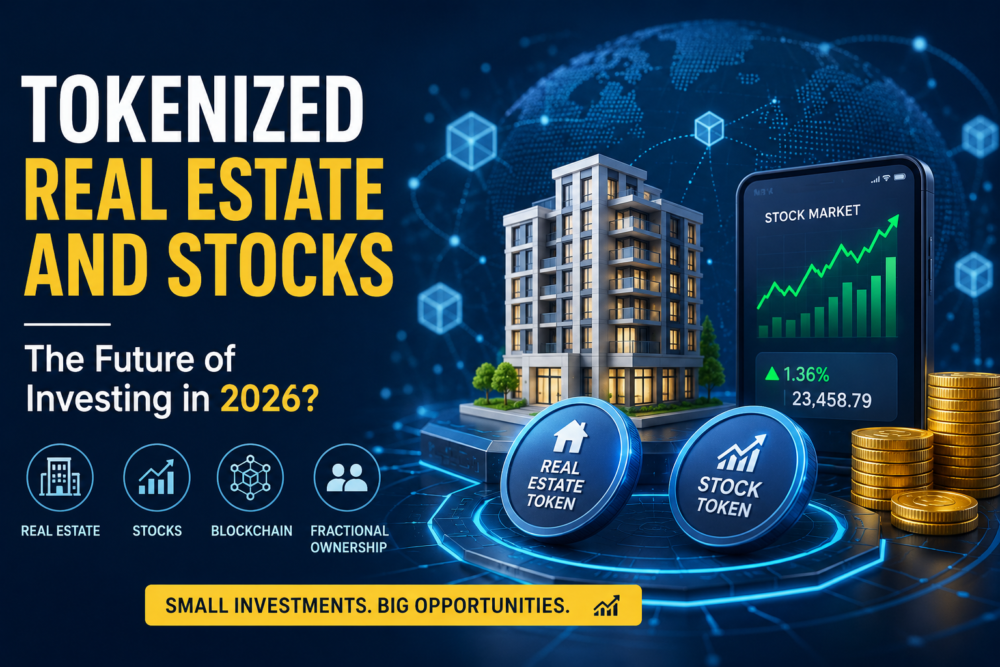
Tokenized real estate and stocks are becoming one of the most talked-about investment trends in 2026. By allowing fractional ownership, lower investment minimums, and broader access to financial markets, tokenization is opening new opportunities for everyday investors.
While challenges such as regulation, liquidity, and technology risks still exist, the potential benefits are attracting growing interest from both retail and institutional investors.
As blockchain technology continues to evolve, tokenized assets may play an increasingly important role in the future of investing. For beginners willing to learn and invest carefully, this emerging sector could become an exciting addition to a diversified investment strategy.
Disclaimer
The information provided in this article is for educational and informational purposes only and should not be considered financial, investment, legal, or tax advice. Investments in tokenized real estate, digital assets, and other alternative investment products involve market risks, regulatory uncertainty, liquidity risks, and potential loss of capital.
Always conduct your own research, carefully read the offering documents, and consult a qualified financial advisor before making any investment decisions. Past performance does not guarantee future results, and investment values may rise or fall depending on market conditions.
RicherGuide does not endorse or recommend any specific investment platform, issuer, or financial product. Readers are solely responsible for their own investment decisions.