Investing is one of the smartest strategies to grow your wealth and secure your financial future. But before diving into mutual funds, stocks, or other investment instruments, it’s essential to have a clear direction and that direction begins with setting financial goals. Without them, investing is like driving without a destination: you might move fast but end up lost.
Setting financial goals helps you understand why you’re investing, how much to invest, and when you’ll need the funds. This post breaks down how to set effective financial goals step by step before you start investing.
Table of Contents
1. Understand Why You’re Investing
Start by asking yourself: “Why am I investing?” Your reason shapes your investment goals and strategy.
Examples include:
- Building long-term wealth.
- Saving for your child’s education.
- Planning for retirement.
- Buying a home in the next few years.
Each goal differs in timeline, risk tolerance, and investment type. Defining your “why” helps you choose the right investment path.
2. Identify Your Financial Priorities
List your financial goals and rank them by urgency. Not all require immediate money.
| Time Frame | Examples | Urgency |
|---|---|---|
| Short-term (1-3 years) | Emergency fund, vacation, vehicle, small debts | High |
| Medium-term (3-7 years) | Home down payment, business startup, education | Medium |
| Long-term (7+ years) | Retirement, wealth building, legacy planning | Low to medium |
This classification helps allocate your investments based on how soon you’ll need the money.
3. Define Your Goals Clearly Using the SMART Formula
Use the SMART framework for effective goals:
- Specific: Define exactly what you want.
Example: Save ₹10 lakhs for child’s education. - Measurable: Add numbers to track progress.
Example: Invest ₹10,000 monthly in mutual funds. - Achievable: Be realistic given your income and expenses.
Example: Increase investment by 5% yearly. - Relevant: Ensure goals suit your lifestyle and future needs.
Example: Support quality education for your child. - Time-bound: Set a deadline.
Example: Achieve goal in 8 years.
SMART goals make planning and tracking effortless. Learn more about SMART goals from Khan Academy.
4. Know Your Financial Situation
Evaluate your financial health:
- Monthly income and savings.
- Existing debts, especially high-interest ones.
- Comfortable investment amount without affecting daily expenses.
Prioritize clearing high-interest debts and maintaining an emergency fund covering 3-6 months of expenses before investing.
5. Match Your Goals with Right Investment Options
Match investments with your goal timelines and risk appetite:
| Goal Type | Time Frame | Risk Level | Investment Options |
|---|---|---|---|
| Short-term | 1-3 years | Low | Fixed Deposits, Liquid Mutual Funds, Recurring Deposits |
| Medium-term | 3-7 years | Moderate | Balanced Mutual Funds, Debt Funds, Bonds |
| Long-term | 7+ years | High | Equity Mutual Funds, Stocks, PPF, NPS |
Proper matching balances growth potential and safety effectively.
6. Calculate How Much to Invest
Determine how much to invest regularly using goal-based calculations or online SIP calculators.
Example:
To accumulate ₹10 lakhs in 10 years at 10% annual return, you need to invest about ₹4,800 per month.
Use financial calculators like the Goal Planner or Motilal Oswal Calculator for precise planning.
7. Review and Adjust Regularly
Life and markets change, so review your goals yearly.
- Increase investments after raises.
- Adjust timelines and asset allocations if needed.
- Rebalance your portfolio based on market shifts.
Continuous reviews keep your plan on track.
8. Stay Disciplined and Patient
Investment growth takes time and consistency.
- Avoid reacting to short-term market volatility.
- Stay focused on your long-term goals.
- Benefit from compounding through regular, small investments.
9. Seek Professional Guidance if Needed
If unsure how to start or choose investments, consult a certified financial planner. Professional guidance can clarify your situation, define goals, and create a solid investment plan. Learn more at Richer Guide.
Conclusion
Setting financial goals before investing empowers you with clarity and purpose. Well-defined, SMART, and regularly monitored goals help you know how much to invest, for how long, and where to invest. Start today by identifying your priorities, calculating investment needs, and committing to your financial future, because when your investments have a goal, your money grows with purpose.
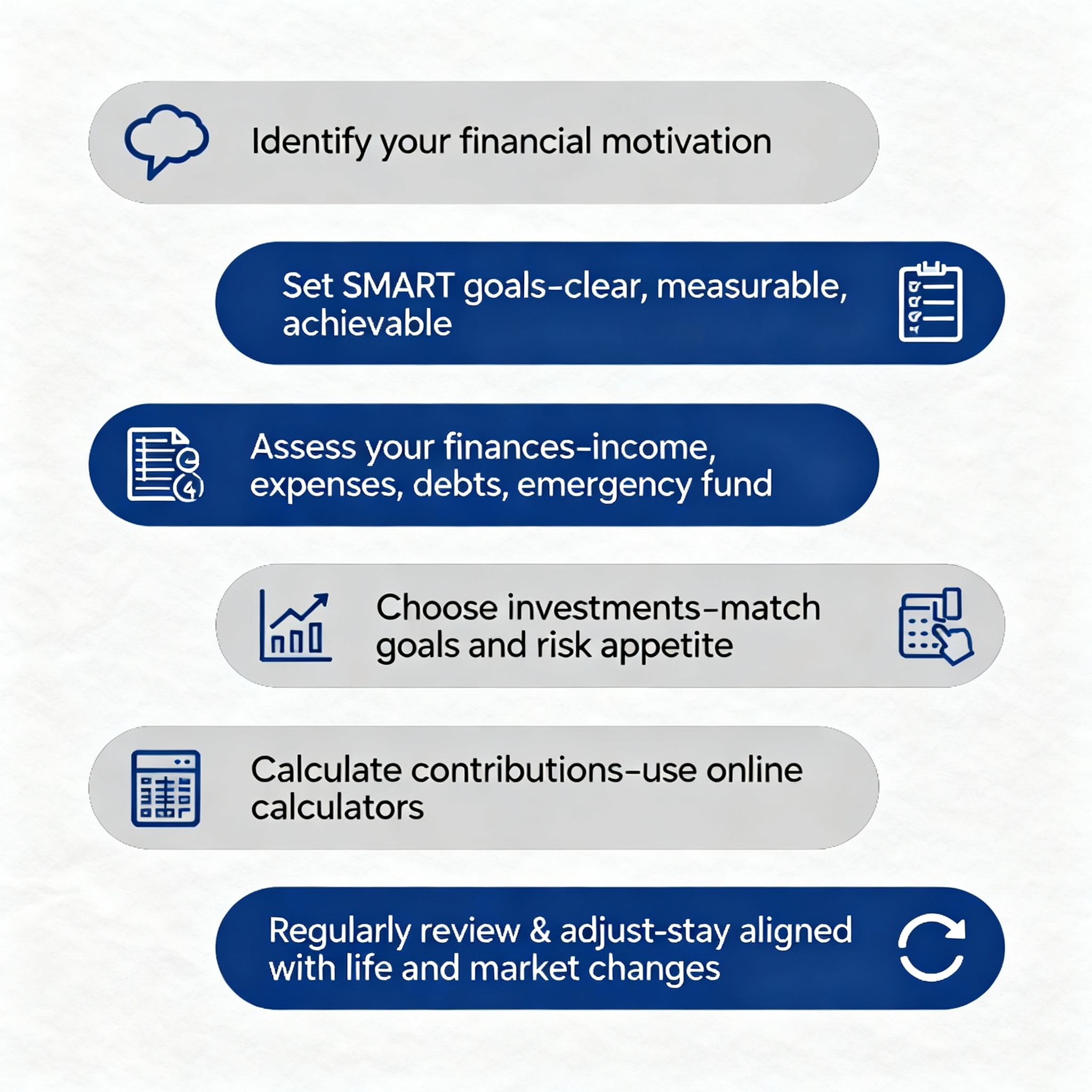
If you want to start now, follow this road map:
| Step | Action |
|---|---|
| 1. Know your “Why” | Identify your financial motivation |
| 2. Set SMART goals | Clear, measurable, achievable goals |
| 3. Assess your finances | Income, expenses, debts, emergency fund |
| 4. Choose investments | Match to goals and risk appetite |
| 5. Calculate contributions | Use online goal calculators |
| 6. Regularly review & adjust | Stay aligned with life and market changes |
With this guide, you are equipped to set effective financial goals before making investment decisions.