Have you ever reached the end of the month and thought, “Where did all my money go?” You’re not alone. Many people struggle with managing their finances simply because they don’t track them.
A budget is your roadmap for money. It shows how much you earn, spend, and save—helping you stay in control instead of letting money disappear unnoticed.
If you’re creating your first monthly budget, this complete step-by-step guide will walk you through the process. It’s simple, beginner-friendly, and packed with real-life examples.
Table of Contents
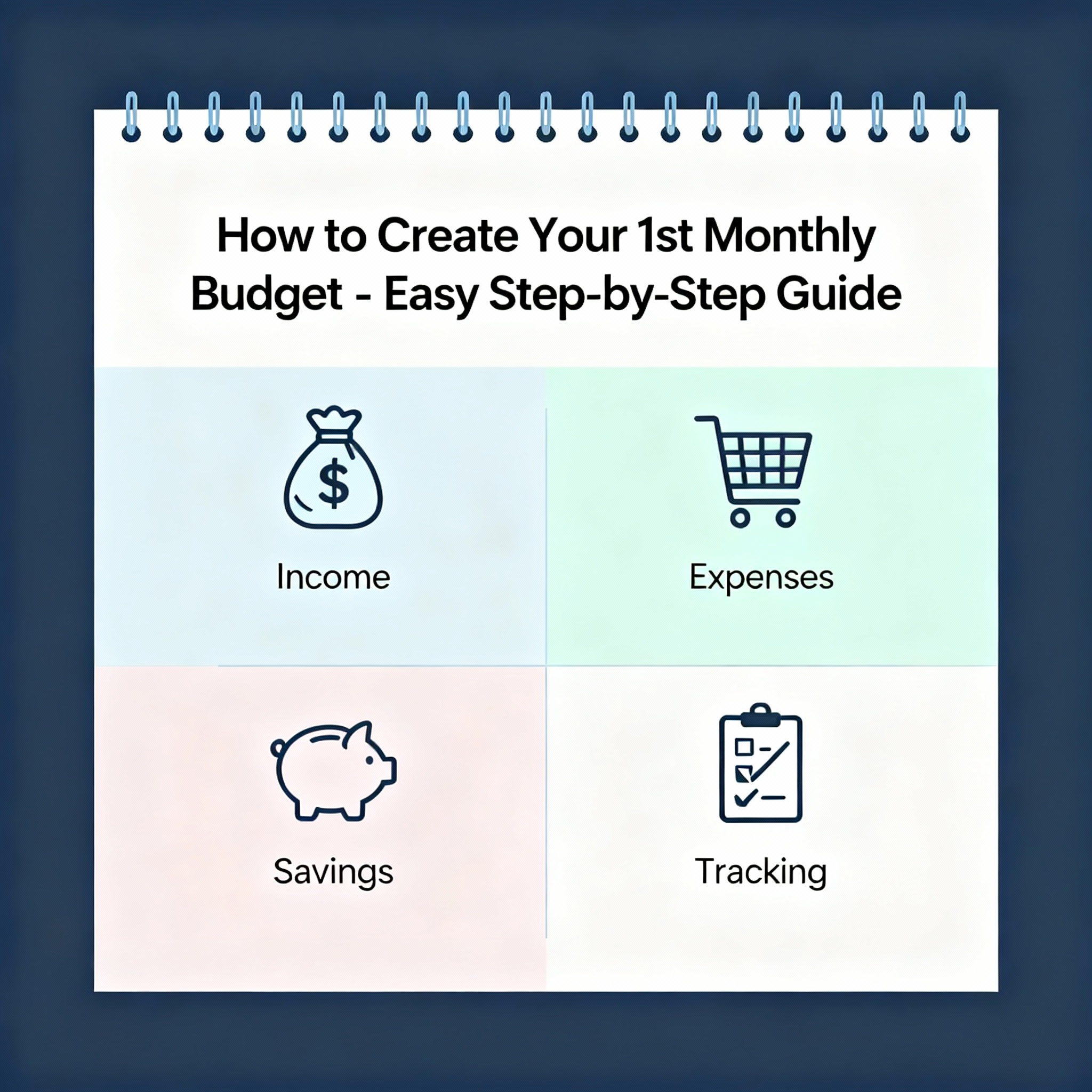
Step 1: Write Down Your Income
Start with the money that comes in every month.
- Salary: record your take-home pay (after taxes).
- Self-employed? Use an average monthly income.
- Multiple income sources? Add them all together.
Example:
| Source | Amount |
|---|---|
| Job Salary | $2,000 |
| Freelance Work | $300 |
| Total Income | $2,300 |
Step 2: List Your Fixed Expenses
These are consistent every month—your essentials.
| Fixed Expense | Monthly Cost |
|---|---|
| Rent | $800 |
| Utilities | $150 |
| Internet + Phone | $70 |
| Insurance | $100 |
| Total Fixed Expenses | $1,120 |
Step 3: List Your Variable Expenses
These change based on habits or lifestyle.
| Variable Expense | Monthly Cost |
|---|---|
| Groceries | $300 |
| Transport | $150 |
| Eating Out | $120 |
| Shopping | $100 |
| Entertainment | $80 |
| Total Variable Expenses | $750 |
Step 4: Set Aside Savings
Savings prepare you for future needs and emergencies.
Types of Savings:
- Emergency fund (3–6 months of expenses)
- Retirement contributions (mutual funds, pension)
- Short-term goals (vacation, car, education)
Rule of thumb: Save at least 20% of your income.
Example: 20% of $2,300 = $460.
Step 5: Compare Income and Expenses
Combine everything to check where you stand.
| Category | Amount |
|---|---|
| Total Income | $2,300 |
| Fixed Expenses | $1,120 |
| Variable Expenses | $750 |
| Savings | $460 |
| Total Expenses | $2,330 |
You’ve overspent by $30—but don’t worry; adjustments come next.
Step 6: Adjust and Cut Back
When your expenses exceed income, look for small tweaks in flexible areas.
Money-saving tips:
- Cook at home more often.
- Cancel unused subscriptions.
- Limit impulse shopping.
- Use public transport or carpool.
Example: Reduce eating out from $120 to $90 to balance your budget.
Step 7: Try the 50-30-20 Rule
This simple formula helps you manage money wisely:
| Category | Percentage | Example (on $2,300) |
|---|---|---|
| Needs | 50% | $1,150 |
| Wants | 30% | $690 |
| Savings | 20% | $460 |
Keep this ratio as your long-term budgeting compass.
Step 8: Track Your Spending
Tracking ensures your money behavior matches your plan.
Ways to track:
- Excel or Google Sheets
- Notebook or journal
- Free apps: Mint, Goodbudget, YNAB
Example:
If groceries are budgeted at $300 and you’ve already spent $250 mid-month, slow down to stay within limits.
Step 9: Review Your Budget Monthly
Your budget isn’t permanent; it evolves as your life changes.
Ask yourself:
- Did I overspend anywhere?
- Can I increase savings next month?
- Do seasonal expenses need adjustments?
Example:
If summer electricity bills rise, reduce dining out to balance.
Step 10: Be Consistent
Budgeting is about building a habit, not being perfect. The more consistent you are, the more confident you’ll feel about money.
You’ll gradually notice:
- Less financial stress
- Increased savings
- More control and freedom with spending
Why Your First Budget Matters
Creating a budget is more than a financial tool—it’s a mindset shift. It teaches discipline, prevents debt, and brings peace of mind.
Think of it as a financial mirror that reflects your habits, priorities, and progress toward independence.
When you stick to your first budget, you’re not just managing money—you’re designing your financial future.
Final Thoughts
Your first monthly budget doesn’t need to be perfect. It’s a starting point for financial growth. Write down your income, list expenses, save consistently, and review monthly—it’s that simple.
Remember:
“A budget isn’t about restriction—it’s about freedom. It gives you the power to spend on what truly matters while securing your financial future.”