Why Budget Goals Fail (and How You Can Succeed)
We’ve all been there — setting an ambitious budget at the start of the month, only to watch it crumble by week two.
The truth is, most budgets fail not because people can’t save money, but because they set goals that don’t fit real life.
A realistic budget doesn’t just look good on paper — it actually works in practice. It should help you manage your money confidently without feeling deprived.
Let’s look at 7 powerful and practical steps to create a budget that sticks — one that keeps your finances healthy and your stress low.
Table of Contents
Step 1: Know Where Your Money Really Goes
Before setting goals, you need to understand your spending habits.
Start by tracking every rupee you spend for at least one month. You can use free tools like Mint or YNAB (You Need A Budget), or even a simple Excel sheet.
When you see your money clearly — groceries, dining out, subscriptions — you’ll spot the areas where you can realistically cut back.
💬 Internal Tip: Check out our guide on How to Build an Emergency Fund from Scratch to understand where savings should fit in your budget plan.
Step 2: Define Your “Why”
A budget is not just about numbers — it’s about purpose.
Ask yourself: Why do I want to budget?
- To save for a vacation?
- To pay off debt?
- To build long-term financial freedom?
Your “why” becomes your motivation when sticking to the plan gets tough.
The stronger the reason, the easier it is to stay disciplined.
💬 Pro Tip: Write your “why” on a sticky note and place it where you’ll see it daily — on your mirror, fridge, or laptop.
Step 3: Set SMART Financial Goals
To make your budget stick, your goals must be SMART —
Specific, Measurable, Achievable, Relevant, and Time-bound.
Instead of saying:
“I’ll save more money this year.”
Say:
“I’ll save ₹5,000 per month for the next 6 months to build a ₹30,000 emergency fund.”
This gives you a clear roadmap and helps track your progress.
💬 Internal Link: Read our blog on How to Set Financial Goals Before You Invest for a deeper look at SMART goal planning.
Step 4: Categorize Your Budget the Right Way
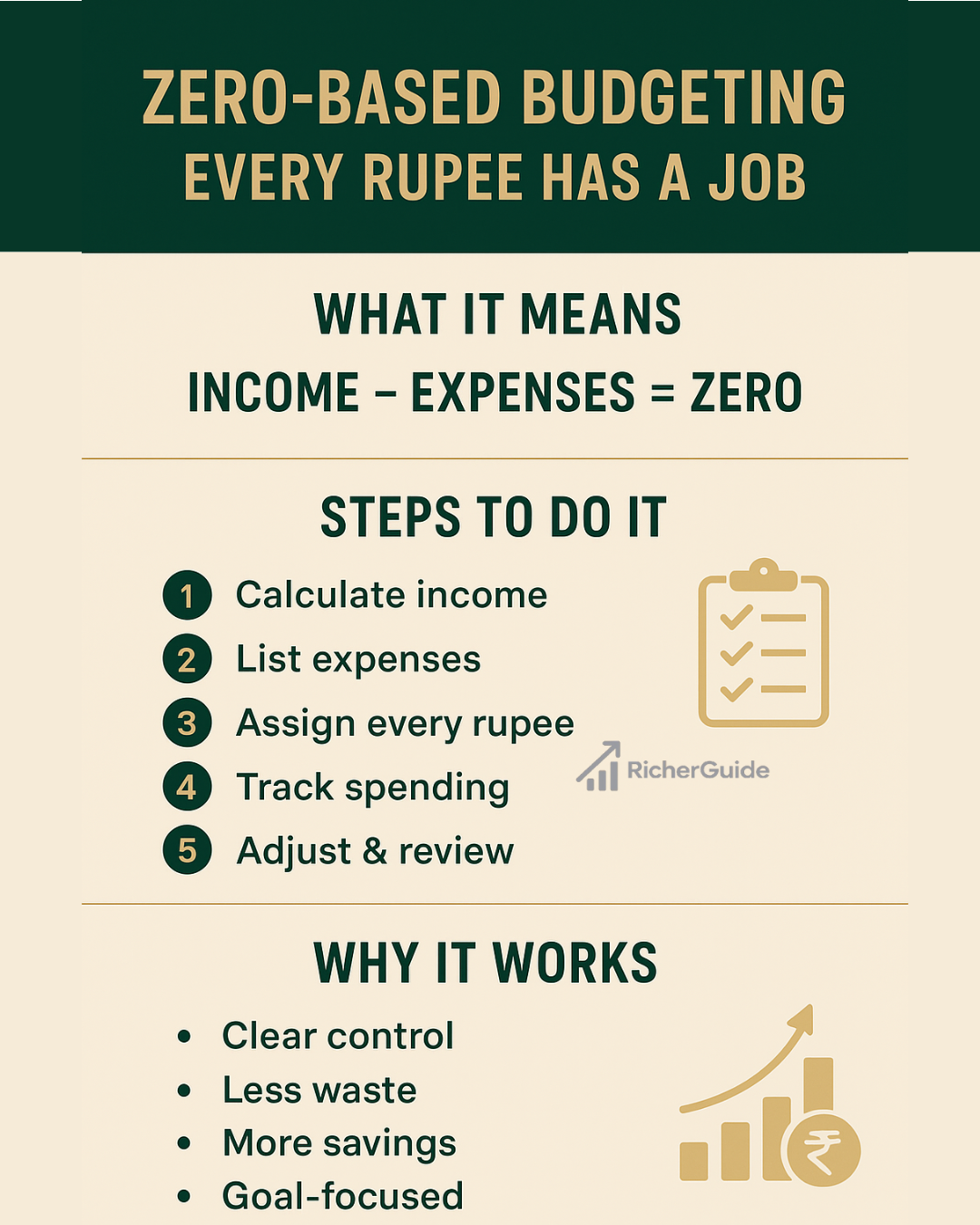
Once you’ve tracked your spending and defined your goals, it’s time to structure your budget.
A simple and effective model is the 50/30/20 rule:
- 50% Needs — rent, utilities, groceries, healthcare
- 30% Wants — dining out, shopping, entertainment
- 20% Savings/Debt repayment — emergency fund, investments, EMI clearance
This formula gives flexibility while ensuring balance.
You can adjust the percentages based on your income and lifestyle, but the key is to spend consciously.
External Resource: Learn more about the 50/30/20 rule from Investopedia.
Step 5: Plan for Real Life, Not Perfection
A common reason budgets fail is being too strict.
You might plan to spend ₹0 on dining out — but realistically, life happens!
Allow yourself small treats within your budget. That way, you won’t feel deprived or tempted to quit entirely.
Budgeting is like dieting — consistency matters more than perfection.
💬 Internal Link: Read What to Do When Your Budget Isn’t Working to troubleshoot and adjust your plan mid-way.
Step 6: Automate Your Savings
If you rely on willpower to save, chances are you’ll struggle.
Automation is your secret weapon.
Set up auto-transfers from your salary account to a savings or investment account right after payday.
This makes saving effortless — you’ll adapt your spending to what’s left, not the other way around.
💬 External Link: Explore simple automation options with Groww or ET Money to start your financial journey easily.
Step 7: Review, Adjust, and Repeat
Your budget isn’t a one-time project — it’s a living plan that changes as your life evolves.
If you get a raise, move cities, or your expenses shift, your budget should too.
Review it every month, identify what’s working, and tweak what isn’t.
💬 Internal Tip: Read our post Review. Adjust. Repeat. to see how small tweaks can lead to big progress.
Bonus Tip: Reward Yourself for Staying Consistent
When you hit a financial goal — celebrate it!
Treat yourself to a movie night or your favorite meal.
Small rewards help you stay positive and motivated.
Remember, budgeting isn’t punishment — it’s progress toward the life you want.
Final Thoughts: Realistic Budgets Build Real Freedom
Setting a realistic budget is one of the most powerful habits you can build.
It gives you control, peace of mind, and confidence in your financial future.
Start small, stay consistent, and adjust as life changes.
Because the real goal isn’t just to “budget” — it’s to live richer and wiser every single day.
Disclaimer: This content is for Educational purposes only and is not financial advice. Please research independently or consult a financial advisor before investing.