Many people think investing requires a huge sum, only for the wealthy or finance experts. The truth? You can start investing with very little and still build wealth over time. This post breaks down exactly how much money you need, how to begin smartly, and how to grow your investments.
Table of Contents
Step 1: Understand What Investing Really Means
Investing means putting your money into assets that can grow over time such as stocks, mutual funds, bonds, gold, or real estate. The goal is to make your money generate returns—not just sit idle. For instance, ₹1,000 invested in a mutual fund with a 10% annual growth will become ₹1,100 in a year, with compound growth multiplying your wealth over time.
Step 2: The Truth — You Don’t Need a Lot to Start
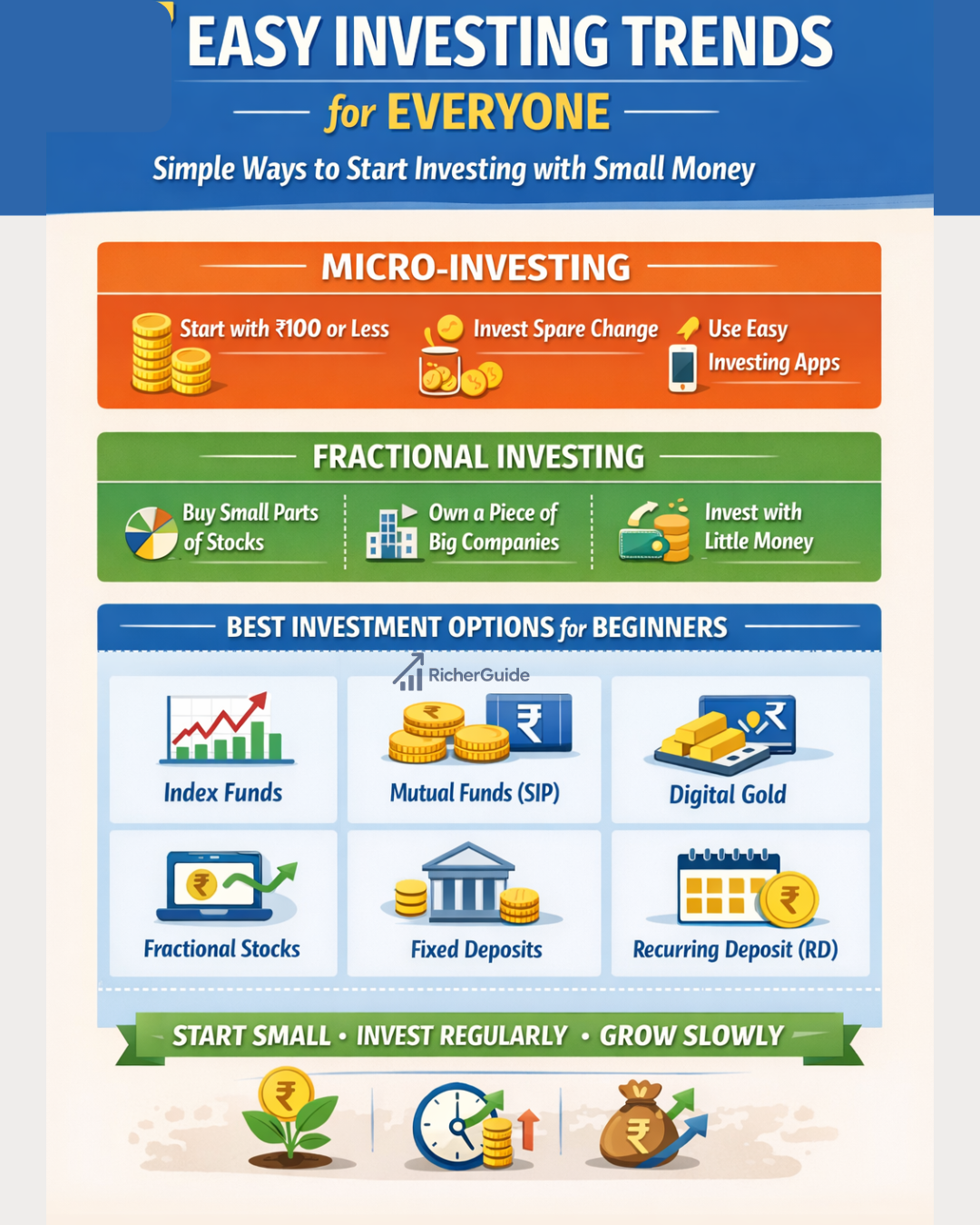
The biggest myth: investing requires a large sum. In India, many mutual funds offer Systematic Investment Plans (SIPs) starting at ₹100 or ₹500 monthly. Digital platforms even allow fractional share purchases, letting you invest small amounts. Gold ETFs and digital gold can start from ₹1. What counts is starting early and investing consistently.
Step 3: Set Clear Financial Goals
Knowing your why guides how much to invest and where. Examples of goals by time horizon:
| Goal Type | Example | Time Horizon | Investment Type |
|---|---|---|---|
| Short-term | Buying a phone, trip | 1–2 years | Savings or debt funds |
| Medium-term | Buying a bike or car | 3–5 years | Balanced mutual funds |
| Long-term | Buying a house, retirement | 10+ years | Equity mutual funds, stocks |
Clear goals help tailor your investment amount and vehicle.
Step 4: Build an Emergency Fund First
Before investing, save 3–6 months of expenses for emergencies to avoid cashing out investments at a loss. For instance, if monthly expenses are ₹25,000, aim for ₹75,000 to ₹1,50,000 as a safety cushion.
Step 5: Start Small but Be Consistent
Consistency beats large one-time investments. For example, investing ₹500 monthly for 10 years at 12% returns grows ₹60,000 contributions to about ₹1,15,000 because of compounding. Increasing contributions gradually accelerates wealth growth.
Golden Rule: “It’s not about timing the market, it’s about time in the market.”
Step 6: Choose the Right Investment Options
Here are some beginner-friendly options allowing small starts:
| Investment Option | Description | Minimum Start (Approx.) | Suitability |
|---|---|---|---|
| Mutual Funds (SIP) | Diversified, expert-managed funds | ₹100–₹500/month | Beginners, long-term growth |
| Stocks | Direct company shares, fractional investing possible | ₹10+ | Higher risk/return, long-term |
| Exchange Traded Funds (ETFs) | Trade like stocks, low fees, diversified | Cost of 1 share (~₹100 or less) | Easy buying/selling |
| Gold Investment | Digital gold, Gold ETFs | ₹1 | Inflation hedge, safety net |
| Government Schemes | Safe options like PPF, NSC, Sukanya Samriddhi | Small fixed amounts | Conservative investors |
Step 7: Keep Learning and Growing
Financial literacy improves investment decisions.
Quick tips:
- Read beginner-friendly blogs/videos about investing basics.
- Track investments but avoid panic from short-term volatility.
- Review and adjust goals yearly.
- Increase investment amounts with rising income.
Knowledge + consistency = financial freedom.
How to Start Right Now
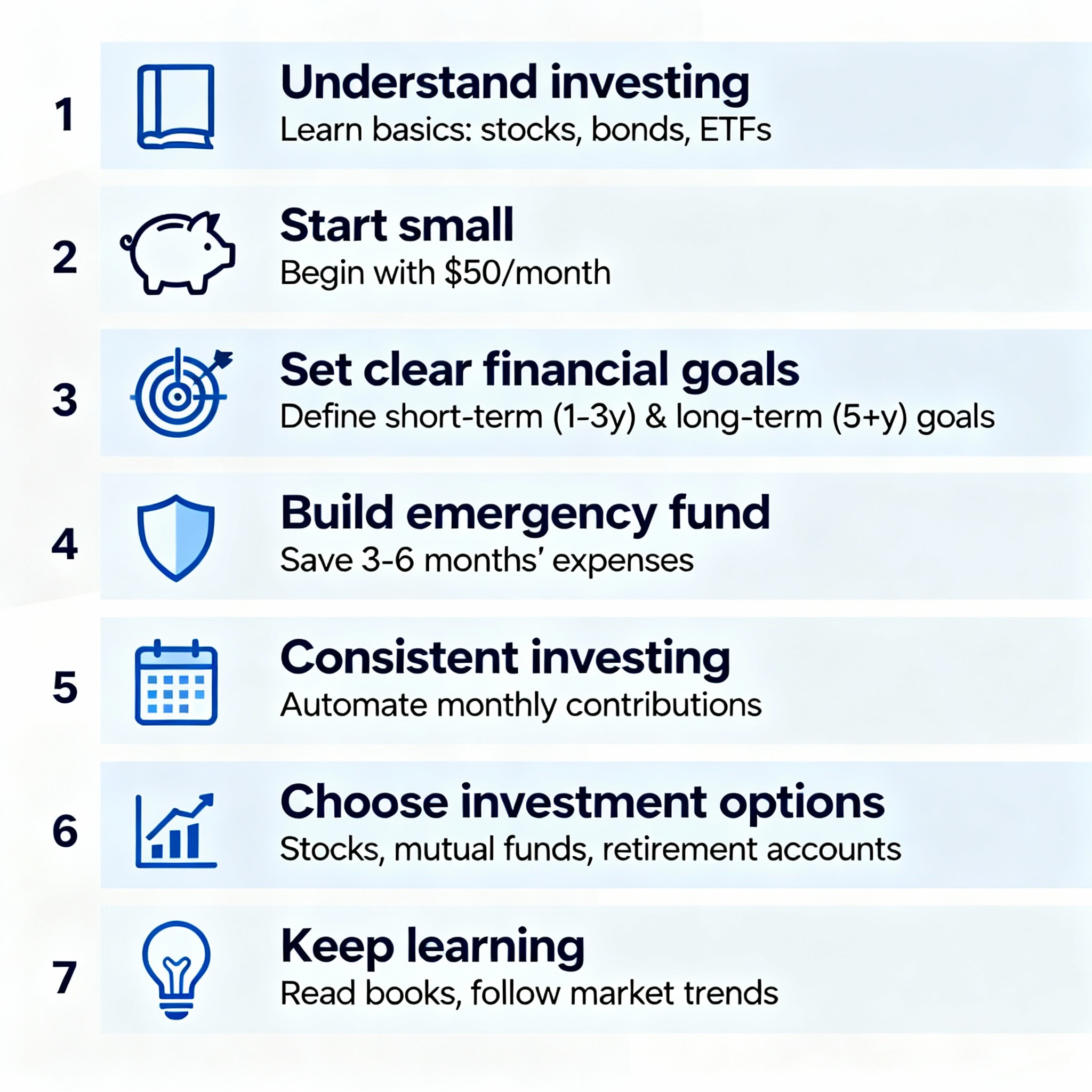
- List your financial goals.
- Save 3–6 months of expenses as an emergency fund.
- Choose an investment platform (Groww, Zerodha, Paytm Money).
- Start a SIP with ₹100, ₹500, or ₹1,000.
- Stay invested without premature withdrawals.
- Review yearly and increase SIP amounts gradually.
Final Thoughts
How much money do you need? Even ₹100 to start is enough. The power lies in time and habit, not starting size. Every big investor started small. Start today, stay patient, and watch your money grow.
“The best time to plant a tree was 20 years ago. The second-best time is today.”
If you want to explore investments or platforms, visit Groww, Zerodha, or Paytm Money to get started.